Quality & Testing, Regulation & Standards, Medical Devices
ISO 10993-4 Hemocompatibility Test Selection for Direct and Indirect Blood-Contact Devices
Updated
A hemocompatibility plan should not start with a fixed list of assays. It should start with the way the finished device, its components and any released substances can interact with circulating blood.
ISO 10993-4 provides a framework for selecting tests for interactions with blood. It does not make every blood-contacting device subject to the same test battery. A low-risk indirect-contact fluid set and a blood pump may both be associated with blood exposure, but they create very different risks. The evidence should reflect those differences.
The practical task is to connect intended use, contact classification, materials, device geometry and flow conditions to the endpoint that can answer the relevant safety question.
Begin with the actual blood-exposure pathway
First, map the device rather than relying on its broad product name. Record:
- every component that directly contacts circulating blood;
- components that contact an infusate, saline, drug product or another fluid that subsequently reaches blood;
- materials, coatings, colorants, adhesives, lubricants and processing residues in those pathways;
- contact duration, blood volume exposed and whether exposure is repeated;
- whether blood is stagnant, slowly moving, recirculating or exposed to high shear; and
- whether the patient population is likely to be anticoagulated.
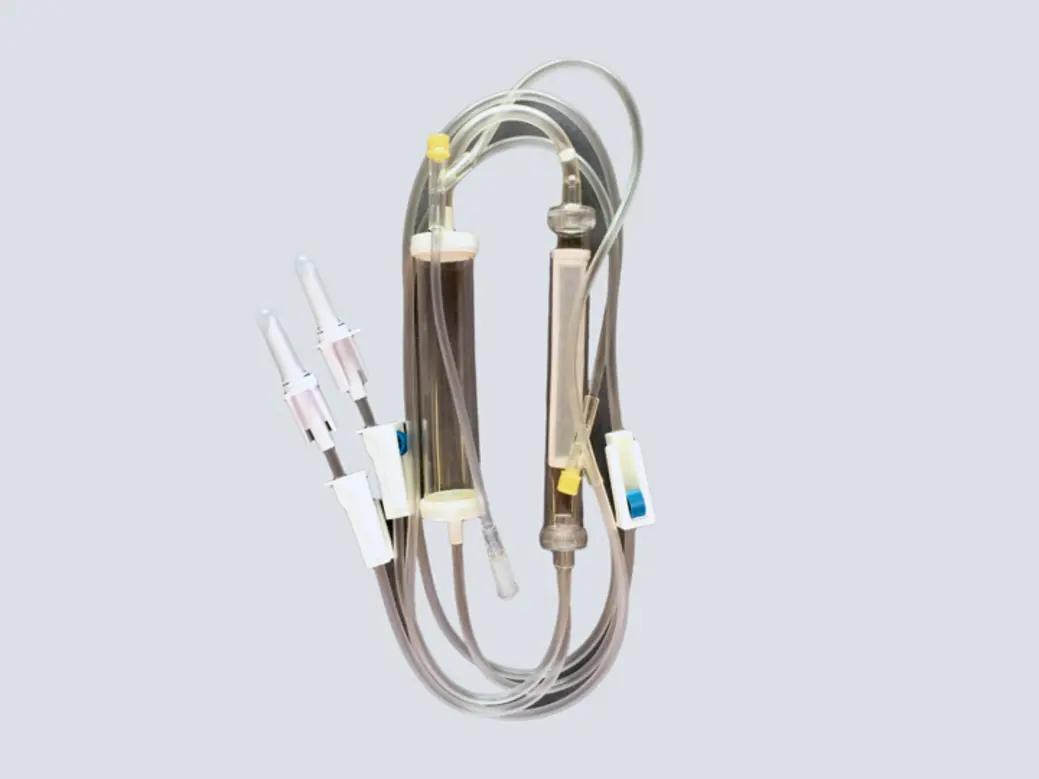
This map often changes the initial test plan. For example, a catheter may have a straightforward blood-contacting polymer shaft, but also a hydrophilic coating, radiopaque filler, bonded hub and guidewire lumen. A tubing set may never physically touch blood, yet its fluid-contacting materials can release substances into an infusion that enters the circulation.
The distinction between direct and indirect blood contact is important, but it is not a reason to stop thinking about exposure. Direct contact concerns a device surface that contacts circulating blood. Indirect contact generally concerns a device that contacts a fluid or substance that can enter the blood.
Under FDA biocompatibility guidance, direct contact with circulating blood calls for consideration of hemolysis, complement activation and thrombogenicity, unless these risks are otherwise addressed by the risk assessment. For indirect contact with circulating blood, hemolysis is generally the primary endpoint to consider. However, novel materials, unusual chemical release profiles and devices intended to release a substance into circulation can justify broader in vitro assessment.
Confirm the applicable device category and standard edition
ISO 10993-4 should be used alongside the biological evaluation process in ISO 10993-1 and the device-specific expectations of the intended market. The standard’s device examples and recommendations help structure the assessment, but they do not replace a documented rationale for the finished device.
Recent amendments to ISO 10993-4 have updated the placement of some device types. In particular, products such as blood collection devices, cannulae, cell savers, and equipment for storage or administration of blood and blood products have been treated as direct blood-contact applications in the amended classification. Teams should therefore verify the edition and amendment adopted for their submission and avoid using an old internal test-selection matrix without review.
A useful planning question is: Can blood touch this surface, or can a substance from this component enter the blood at a clinically relevant level? If the answer is yes, describe exactly how and for how long.
Select endpoints by the question each test can answer
Hemocompatibility is not one biological response. Red-cell damage, platelet activation, coagulation, thrombus formation and complement activation have different mechanisms. A negative result in one test does not establish that the other mechanisms are controlled.
| Endpoint | Main question | Particularly relevant situations | Important limitation |
|---|---|---|---|
| Hemolysis | Does the device or an extract damage red blood cells? | Direct or indirect blood-contact devices; high-shear flow paths | May not reveal platelet, coagulation or complement effects |
| Complement activation | Does the surface activate the complement system? | Direct blood-contact surfaces, novel coatings and high-surface-area devices | Static exposure may not represent clinical circulation |
| Platelet assessment | Does the device activate, consume or promote adhesion of platelets? | Blood pumps, oxygenators, filters, vascular devices and complex flow paths | Platelet response is sensitive to handling, anticoagulation and shear |
| Coagulation assessment | Does the device affect clotting pathways or generate coagulation markers? | Devices with direct blood contact or a concern about material-induced coagulation | A single clotting-time result may not describe total thrombogenic risk |
| Thrombogenicity | Does the complete device create conditions that promote thrombus formation? | Devices with blood-contacting geometry, recirculation zones, valves or implanted vascular surfaces | Requires a clinically relevant model and careful interpretation |
Hemolysis: direct surface effects and extract effects
Hemolysis testing evaluates damage to red blood cells, usually by measuring free hemoglobin after exposure. It is relevant to both direct and indirect blood-contact pathways, but the test article should match the mechanism being investigated.
For a direct-contact device, direct-contact hemolysis can assess the effect of the blood-contacting surface. This can capture mechanical or surface-mediated damage that an extract alone would miss. It is especially important where roughness, sharp transitions, narrow gaps, turbulent features or high shear may contribute to red-cell injury.
Indirect or extract-based hemolysis assesses whether substances released from the device can damage red cells. It is commonly central to an indirect blood-contact rationale because the fluid contacting the device can carry extractables into circulation.
For extract testing, do not assume a generic extraction condition represents clinical use. Select solvents, temperature, duration and surface-area-to-volume relationships that are scientifically justified for the actual fluid pathway. An infusion set used with a drug formulation may extract a different chemical profile than the same set exposed only to saline.
When direct blood contact needs more than hemolysis
For devices with direct circulating-blood contact, hemolysis alone is usually too narrow. A surface can leave red cells intact while still causing platelet adhesion, coagulation activation, complement activation or thrombus formation.
Complement testing is useful when the concern is an innate immune response to the blood-contacting surface. It may be particularly relevant for devices with large surface areas, novel materials, particulate-generating surfaces or prolonged extracorporeal blood exposure. Common markers can include terminal complement complex measurements such as SC5b-9, depending on the method and study objective.
Platelet and coagulation assessments help investigate different parts of thrombus formation. Platelet count changes, platelet activation markers, platelet adhesion or microscopy can indicate interaction with platelets. Coagulation markers can help show whether the device influences the coagulation system. The most meaningful marker depends on the hypothesis, test system and anticoagulation approach.
Do not select a coagulation assay simply because it is familiar. For example, partial thromboplastin time can be influenced by the assay system and may not be sufficiently sensitive or representative for every blood-contact device. The study plan should explain why each endpoint is suitable for the anticipated device effect.
Treat thrombogenicity as a device-level risk
Thrombogenicity is often driven by the complete design, not just the base polymer or metal. Geometry can create local low-flow regions, stagnation zones, abrupt expansions, recirculation and elevated shear. Surface finishing, seams, bonded joints, coatings, particulate shedding and manufacturing variation can also affect performance.
This is why a coupon test may be useful for material screening but insufficient for final device validation. A flat sample cannot reproduce the flow path of a centrifugal pump, oxygenator, vascular graft, catheter tip, filter or valve.
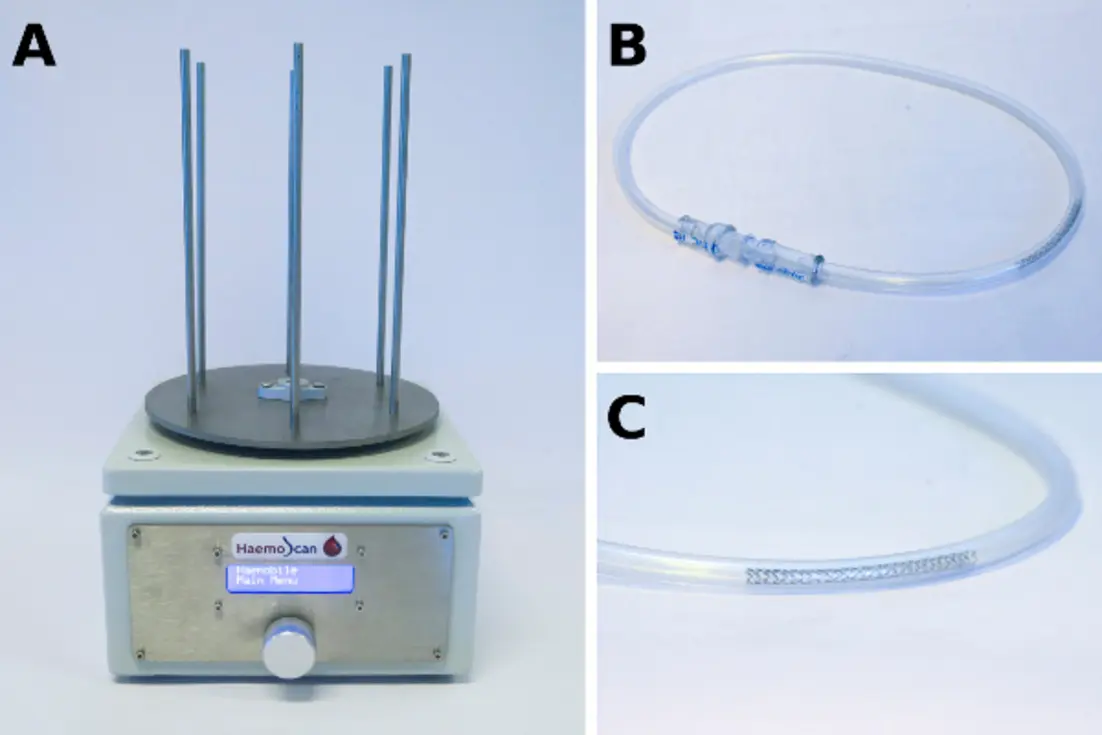
Consider a dynamic human-blood model when the clinical risk depends materially on flow, shear or device geometry. Examples include:
- extracorporeal circuits, oxygenators and blood pumps;
- hemodialysis and hemofiltration flow paths;
- vascular access devices with complex lumens or side holes;
- filters and cell-processing equipment;
- heart-valve, circulatory-support or other cardiovascular components; and
- devices where static screening identifies platelet, coagulation or hemolysis signals that need further investigation.
A dynamic model should recreate relevant operating conditions as far as practical: blood flow rate, pressure, temperature, exposure duration, recirculation, surface area, anticoagulation and the final device configuration. A model does not need to copy every clinical variable, but its departures from clinical use should be understood and justified.
Use human blood where it is feasible and appropriate
Species differ in their platelet, coagulation and complement responses. For higher-risk blood-contact applications, human blood is generally the most relevant test medium when an in vitro method can use it.
That choice creates operational requirements. Donor selection, blood collection, anticoagulant type and concentration, storage time, handling, test timing, controls and replicate strategy can all affect results. Anticoagulation that is too strong may suppress the very device-related effect the study is meant to detect. Insufficient anticoagulation, on the other hand, can produce uncontrolled clotting and invalidate comparisons.
The protocol should define the rationale for the blood source and anticoagulation regime, not merely state that human whole blood was used.
Define the finished test article before sending samples
A common source of weak evidence is testing the wrong article. The final product may differ from the submitted test article through sterilization, aging, processing aids, coatings, assembly adhesives or packaging contact.
For direct-contact assays, focus on the components that directly contact blood. For extract-based assessments, consider both direct and indirect blood-contact components that can contribute chemicals to the fluid pathway. If components have different contact classifications, define what was included, what was excluded and why.
Also document:
- lot numbers and manufacturing status;
- sterilization method and whether samples are aged;
- representative worst-case surface area or flow-path configuration;
- cleaning and handling before testing;
- positive, negative and procedural controls; and
- the clinical comparator, where one is used.
A comparison to a legally marketed device can provide useful context, but it is only meaningful when material exposure, surface area, geometry, duration and operating conditions are sufficiently similar.
Build a staged test plan rather than ordering a broad panel
A staged approach is often more efficient and more informative than commissioning every available assay at once.
Stage 1: Write the risk-based rationale
Define contact classification, duration, blood pathway, materials, chemical characterization information, known material history, device geometry and clinical operating conditions. Identify the specific adverse outcomes that matter: red-cell damage, thrombus, embolic risk, inflammatory response or altered coagulation.
Stage 2: Run focused screening tests
For indirect blood contact, extract-based hemolysis may be the appropriate starting point. For direct blood contact, direct and extract hemolysis, complement and relevant thrombogenicity-related assessment may be needed unless existing evidence adequately addresses a risk.
Stage 3: Investigate signals with targeted methods
If screening suggests platelet loss, activation or coagulation effects, choose follow-up methods that clarify that finding. If hemolysis appears only under flow, investigate the mechanical features and operating conditions rather than treating the result as a generic material problem.
Stage 4: Escalate to dynamic or ex vivo work when static data are not representative
Use a dynamic model when the final device’s geometry and use conditions are part of the hazard. This is also appropriate when static results and clinical risk do not align, or when a material-level result cannot answer a device-level thrombogenicity question.
What a defensible conclusion looks like
A hemocompatibility report should do more than list passing test results. It should show a logical chain from intended use to test selection, test article, method conditions, results and residual risk conclusion.
The key practical principle is simple: test the interaction that can actually occur. Use extract testing to address chemicals that may reach blood. Use direct-contact studies for blood-facing surfaces. Use dynamic human-blood models when flow and geometry may drive the risk. Then interpret all endpoints together with chemical characterization, device design controls and the broader biological evaluation.