Design & Development, Manufacturing, Quality & Testing, Regulation & Standards
How to Validate Medical Device Packaging Without Compromising Sterility, Usability, or Sustainability
Updated
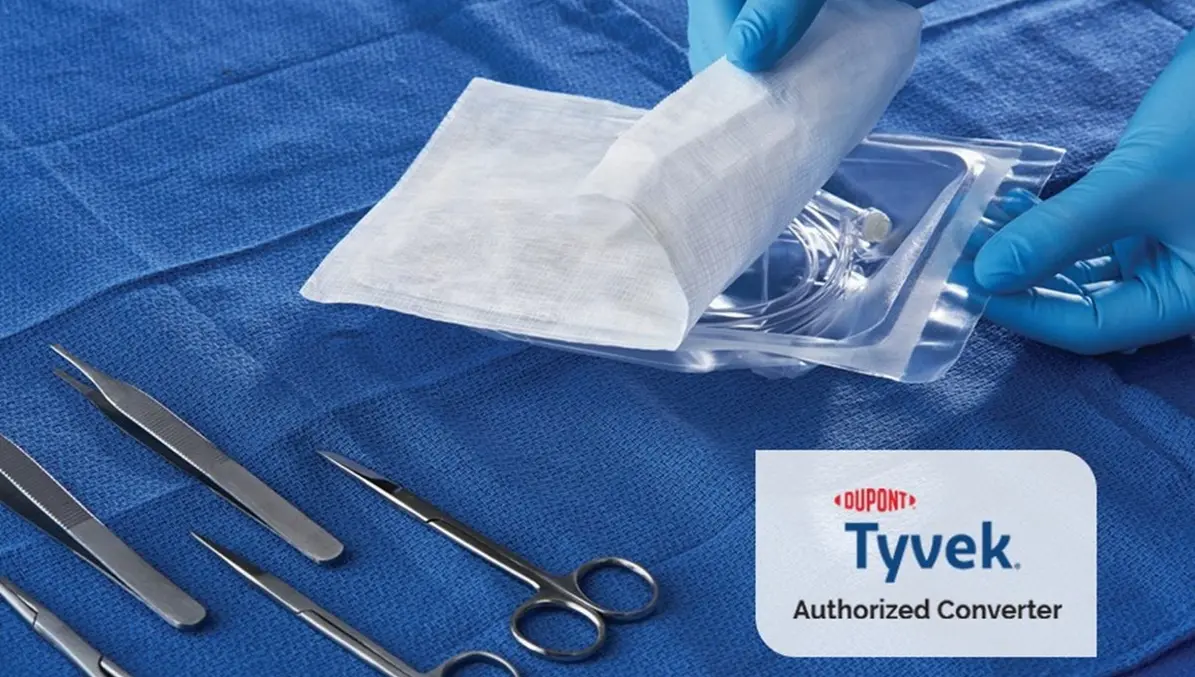
Medical device packaging validation is not a test of a pouch, tray, or carton in isolation. It is evidence that the complete packaging system can be made consistently and will preserve the device through sterilization, shipping, storage, opening, and use.
That makes packaging a design and manufacturing activity, not a final-stage documentation task. A package can have strong seals but fail after irradiation. It can survive a transport test but be difficult to open aseptically. It can use less plastic but create new puncture, labeling, or recycling problems. The practical objective is to build one documented case that the package protects the intended device for its labeled shelf life without creating unacceptable user or environmental trade-offs.
Start by defining the complete packaging system
For terminally sterilized devices, ISO 11607 is the central framework for packaging. Its two parts address different but connected questions:
- ISO 11607-1 addresses materials, sterile barrier systems, and packaging systems. It concerns whether the package design is suitable for the device, sterilization method, distribution route, storage period, and intended use.
- ISO 11607-2 addresses validation of forming, sealing, and assembly processes. It concerns whether production can repeatedly make an acceptable package.
The sterile barrier system is the minimum package that prevents microorganism ingress and permits aseptic presentation. A sealed pouch or tray with lid is commonly the sterile barrier system. The protective packaging includes cartons, dividers, inserts, and shipping cases that prevent damage to that barrier. Together they form the packaging system.
This distinction prevents a common error: validating a pouch seal while treating the carton and shipping configuration as an unrelated logistics matter. If the carton allows the device to shift and puncture a pouch, the overall packaging system has failed, even if the original seal was sound.
Create a packaging design-input document before selecting final materials or writing protocols. It should identify:
- Device mass, dimensions, sharp edges, fragile features, moving parts, and sensitivity to moisture, light, electrostatic charge, or compression.
- Sterilization method and allowable process conditions.
- Sterile barrier format, protective packaging configuration, and the required pack count.
- Expected distribution modes, including air freight, courier networks, pallets, and manual handling.
- Storage conditions and claimed shelf life.
- Intended users, use environment, opening sequence, and aseptic presentation needs.
- Label content, barcode performance, traceability, and legibility requirements through the device life.
- Sustainability objectives that do not reduce safety or regulatory performance.
These inputs should link to the packaging risk analysis. A sharp orthopedic component, for example, may drive reinforcement, device retention, tray geometry, and transit-test configuration. A small, lightweight diagnostic accessory may instead be most vulnerable to loss, label detachment, or opening errors.
Select materials for the sterilization route, device, and package design
No material is inherently suitable simply because it is widely used in medical packaging. Qualification depends on the specific material grade, converter process, sealant layer, device, sterilization cycle, and final use conditions.
Start with the sterilization route. Ethylene oxide sterilization generally requires a package that allows sterilant entry and removal. Radiation processes can affect polymers, adhesives, inks, and some labels through discoloration, embrittlement, or changes in mechanical performance. Steam can impose elevated temperature and moisture stresses that many flexible structures cannot tolerate. The device itself may also affect the packaging choice, such as through chemical interaction, residual moisture concerns, or a need for particulate control.
Material selection should demonstrate that the package can:
- Permit the intended sterilization process where needed.
- Maintain an acceptable microbial barrier for the stated shelf life.
- Resist tearing, puncture, abrasion, and flex damage created by the device and expected handling.
- Form a reliable seal with the selected process.
- Avoid adversely affecting the device, including through contact, residues, ink transfer, or volatile components where relevant.
- Support clean opening and aseptic presentation.
Supplier data can support the selection, but it does not replace validation of the final device-package combination. A preformed pouch may have material and seal information from its supplier, while the manufacturer remains responsible for the final closure, the packaged device, the full distribution configuration, and the final performance claim.
Validate the forming, sealing, and assembly process
A suitable packaging design still fails if the production process creates variable seals, damaged materials, misplaced labels, or inconsistent protective packaging. Process validation should cover the equipment, materials, operating instructions, trained personnel, and defined process controls used in routine manufacture.
The usual qualification sequence is IQ, OQ, and PQ:
- Installation qualification (IQ) verifies that the equipment and supporting utilities are installed as specified. This includes relevant controls, software where applicable, calibration status, maintenance requirements, and documented setup.
- Operational qualification (OQ) establishes the process window. For heat sealing, the study typically challenges defined combinations of temperature, pressure, and dwell time to identify settings that produce acceptable seals. Do not use only nominal settings; the operating range must be understood.
- Performance qualification (PQ) shows that the validated process produces acceptable packages during normal production conditions. Consider routine operators, shifts, planned changeovers, actual materials, and normal operating variation.
Acceptance criteria should relate to the package function, not a generic target. Excessive seal strength may be a problem if it causes tearing, fiber pull, delamination, or an uncontrolled opening. A lower seal-strength result may still be acceptable only if it maintains integrity through the defined lifecycle and opens as intended.
Control the conditions that can change seal performance: material lot, pouch or tray orientation, sealing surface cleanliness, tooling condition, warm-up time, equipment settings, and maintenance. Define which changes require review, requalification, or revalidation. A new film structure, sealant, sterilization dose range, machine, sealing jaw, or package dimension may affect the validated state.
Build a test plan around realistic combined stresses
The useful question is not, “Did the package pass a seal test?” It is, “Does the sterile barrier remain intact after the combined stresses it will experience before use?”
A sound plan defines sample configurations, worst cases, conditioning, test order, sample sizes, acceptance criteria, and statistical rationale before testing begins. It should also state why the selected worst case is conservative for each failure mode.
A larger and heavier device may be worst for drops and vibration. A sharp device may be worst for puncture. A package with the lowest expected seal strength may be worst for seal integrity. The same configuration is not automatically worst case for every test. When configurations have distinct risks, test more than one rather than forcing an unjustified family grouping.
Use complementary seal and integrity tests
Seal strength, visual inspection, and integrity testing answer different questions. One method should not be used as a substitute for the others without technical justification.
Common methods may include:
| Evaluation area | Typical purpose | Practical limitation |
|---|---|---|
| Visual seal inspection | Finds visible channels, wrinkles, contamination, incomplete seals, or other defects | Cannot reliably detect all small defects or prove barrier integrity on its own |
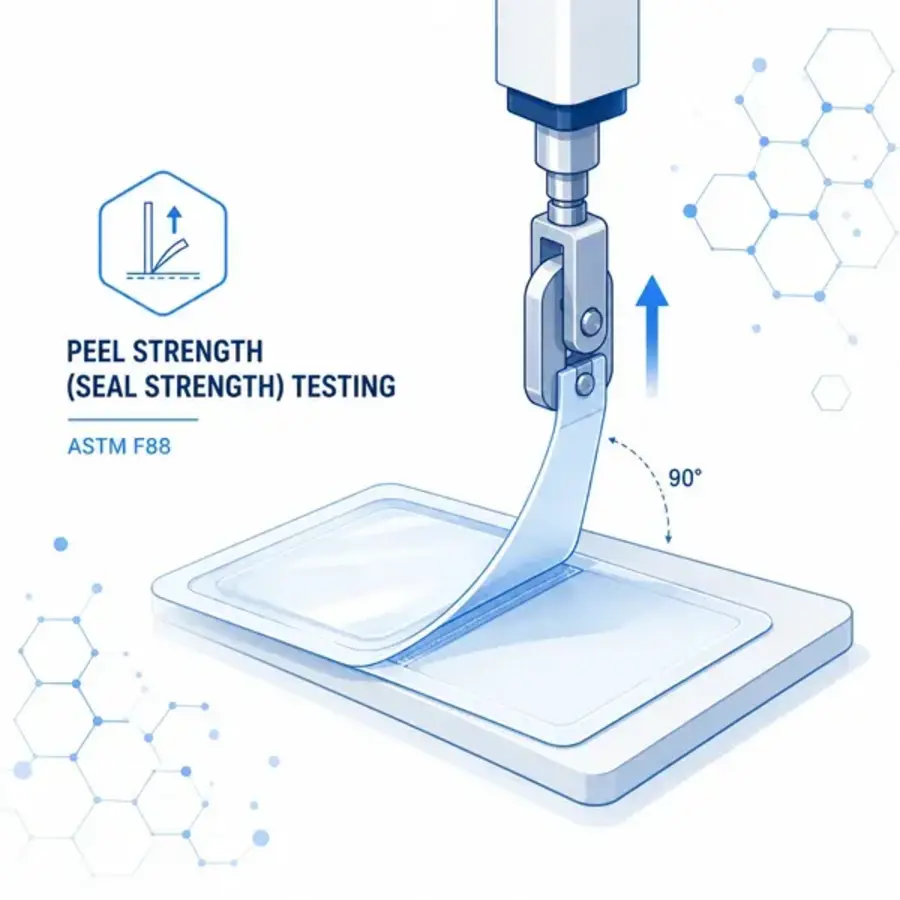
| Seal strength or peel testing | Measures force and opening behavior at a seal | Does not necessarily identify a channel leak elsewhere in the seal |
| Dye penetration testing | Can identify channel leaks in applicable porous-package seal designs | Applicability depends on package materials and test configuration |
| Bubble emission or internal pressurization | Helps identify gross leaks in applicable package types | May not detect every small defect and can be destructive |
| Burst or creep testing | Challenges package seals under internal pressure | Does not replace a method selected specifically for channel or leak detection |
Methods must be appropriate for the package type and must be demonstrated as suitable in the testing environment. Porous and nonporous packages do not use the same integrity methods in every case. Document method capability, repeatability, sample preparation, operator controls, and the reason each method is relevant to the failure mode.
Inspect both the sterile barrier and the protective package after testing. Record damage to cartons, inserts, retention features, labels, and the device itself. A sterile pouch may remain intact while the device has shifted enough to become unusable or while a barcode no longer scans.
Challenge sterilization, shipping, storage, and shelf life
Packaging validation should reflect the lifecycle sequence. Sterilization can change material behavior before the package enters distribution. Transport can create damage that becomes more significant during later storage. Aging can reduce peel performance, label adhesion, or material toughness.
Distribution simulation commonly includes the expected hazards of drops, impact, vibration, compression, and climatic conditioning. Select a recognized test approach or a justified internal profile that reflects the real route. Include the shipping unit actually used in commerce: individual parcel, case-packed shipper, palletized load, or another configuration. Air transport and altitude exposure deserve attention where relevant because pressure changes can stress sealed packages with headspace.
After transit simulation, inspect the device and package, then conduct the defined seal and integrity assessments. Do not rely solely on an undamaged-looking carton as proof that the sterile barrier survived.
Shelf-life justification generally uses real-time aging, with accelerated aging often used to support an earlier market launch while real-time studies continue. Accelerated aging is a planning tool, not a shortcut for using unrealistic temperatures that cause failure mechanisms unrelated to normal storage. Establish the aging conditions and rationale, retain samples for real-time pulls, and test aged packages using the relevant performance methods.
The study design should make clear whether distribution testing occurs before aging, after aging, or in both sequences. The sequence should be justified by the anticipated lifecycle and risk analysis. What matters is that the final evidence addresses the package condition at the end of its claimed life after credible handling and storage stresses.

Treat usability and labeling as package performance requirements
A package that maintains sterility but cannot be opened or presented safely is not fully validated. Evaluate opening and aseptic presentation with intended users or representative users in conditions that reflect use as closely as practical.
Assess whether users can identify the opening point, grip the package, separate the seal in the intended direction, and transfer the device without touching non-sterile surfaces or dropping the device. Consider gloves, wet hands, limited workspace, low lighting, time pressure, and the sterile field where these conditions are relevant to intended use.
Look for practical failures such as:
- A peel pouch that requires two people when single-person opening is expected.
- A seal that tears unpredictably or produces loose fibers.
- A tray lid that springs back into the sterile field.
- Instructions hidden by folds, labels, or nested cartons.
- Similar-looking sides that cause users to open the wrong end.
- Labels that scuff, detach, fade, wrinkle, or fail barcode scanning after sterilization, transit, and aging.
Packaging usability belongs in the design-validation record, while label content and labeling controls also need to meet the applicable market requirements. Packaging changes that alter instructions, symbols, opening sequence, or label location should receive formal change assessment.
Make sustainability decisions within validated boundaries
Sustainability should reduce material use and waste without weakening the sterile barrier, protective function, or user experience. The most credible approach is to treat sustainability as a design input with measurable constraints, not as a post-validation material substitution.
Potential measures include right-sizing cartons, reducing excess headspace, eliminating unnecessary inserts, using lighter protective components, consolidating kit components where clinically appropriate, and selecting structures with improved end-of-life options. Each change must be assessed for its effect on sterilization compatibility, sealability, puncture resistance, distribution protection, label adhesion, opening performance, and local waste-stream realities.
A recyclable material is not automatically a sustainable medical packaging solution if it requires more layers, causes a higher damage rate, cannot enter available recovery streams, or shortens shelf life. Likewise, reducing a carton may save fiber but increase sterile-pouch failures during distribution. Evaluate the whole system and document the trade-off.
Compile one defensible validation package
The final file should allow an auditor, reviewer, or internal change-control team to trace every claim back to a defined requirement and supporting evidence. It should include design inputs, risk management links, material specifications, supplier controls, drawings, process-validation records, test protocols and reports, acceptance criteria, deviations, usability findings, shelf-life rationale, distribution rationale, and change-control requirements.
The clearest medical device packaging validation programs work from one rule: validate the package as users receive and open it, not as it looks immediately after sealing. That keeps sterility, device protection, usability, labeling, and material reduction connected to the same evidence base.