Materials, Manufacturing, Quality & Testing, Medical Devices
Medical Grade Polycarbonate Problems in Manufacturing: Defects, Causes, and Practical Solutions
Updated
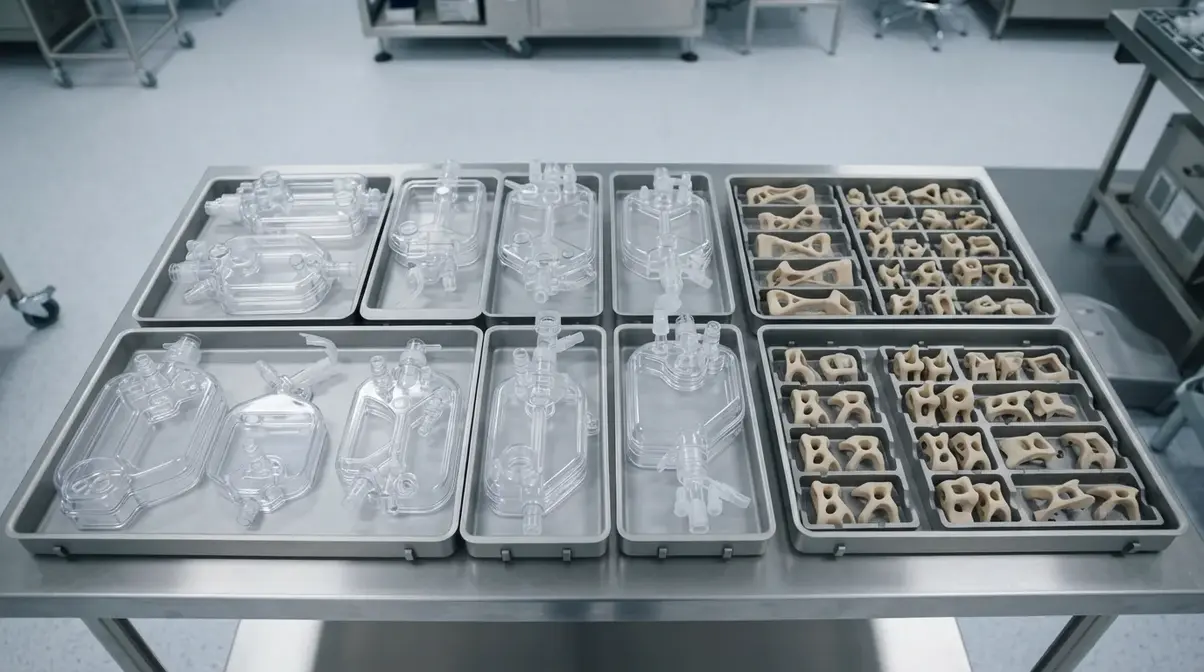
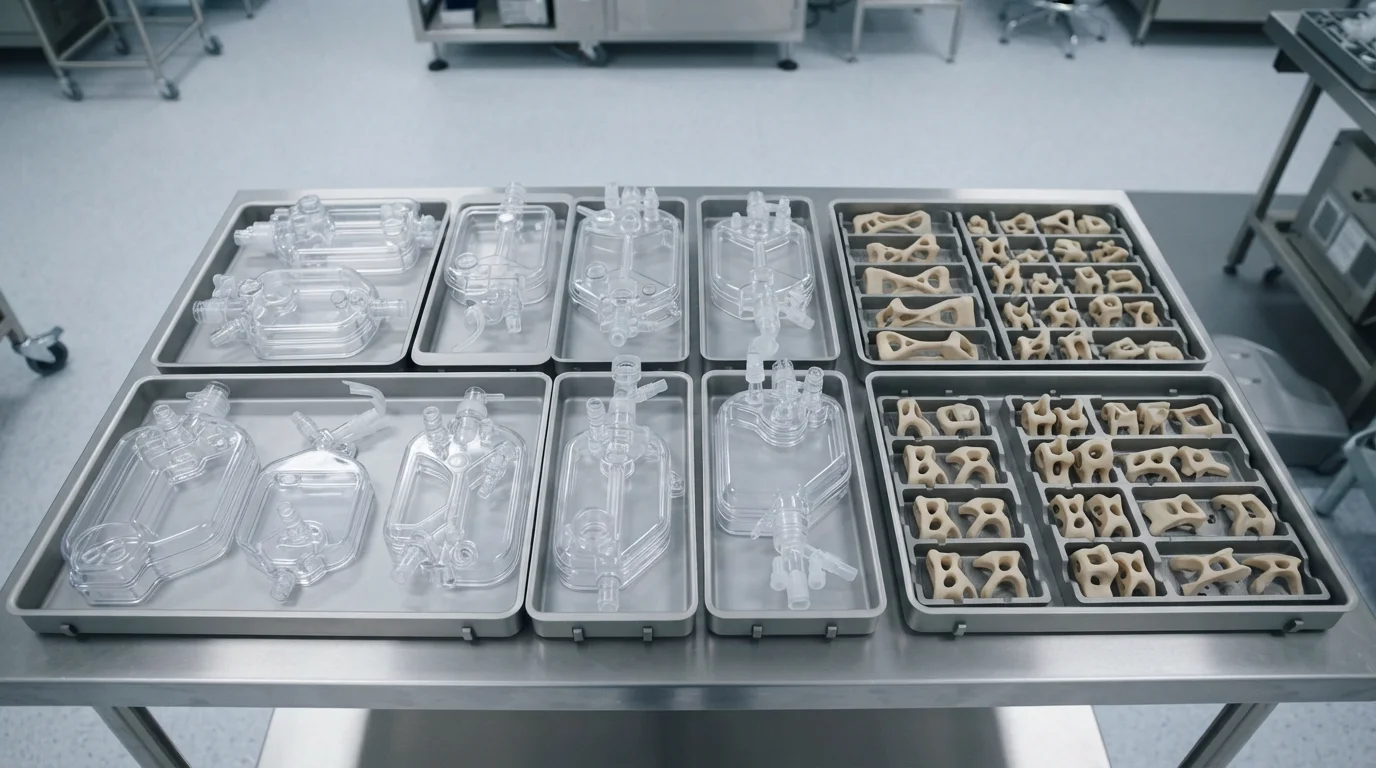
Medical grade polycarbonate is a widely used plastic for device housings, IV connectors, surgical tools, diagnostic cartridges, and more. Its strength, clarity, and processing flexibility make it a common material choice for both single-use and reusable medical devices. However, device engineers and suppliers often run into quality problems during manufacturing and assembly—especially when moving from prototyping to production scale or repetitive sterilization. Surface defects, cracking after sterilization, material fogging, assembly fit issues, and compliance with impurity standards can each threaten usability, product reliability, or certification. This article identifies practical causes and solutions for common defects seen with medical polycarbonate.
Why Typical Polycarbonate Defects Occur in Medical Manufacturing
Polycarbonate’s chemical and physical properties make it sensitive to moisture, stress, thermal cycles, and contamination. For medical applications, regulatory requirements demand not just cosmetic quality but also tight tolerances, zero contamination, and verified process controls. Many common problems can be traced to a handful of root causes:
- Inadequate pre-processing drying:
- Trapped moisture triggers bubbles and silver streaks during melting.
- Poor process parameter control:
- Incorrect temperatures, injection speeds, packing pressure, and cooling result in warpage, short shots, stress, or sink marks.
- No stress-relief annealing:
- Residual stress persists from molding, leading to later stress cracking.
- Material selection or contamination:
- Non-medical grades, recycling, or regrind introduce fogging and impurities.
- Manual finishing or loose tolerances:
- Assembly misfits and gaps due to inconsistent trimming or machining precision.
- Aggressive sterilization/disinfection methods:
- Steam, chemicals, or irradiation amplify microcrack propagation if stress is not minimized.
Each key defect discussed below includes its process-related cause and immediately applicable solutions.
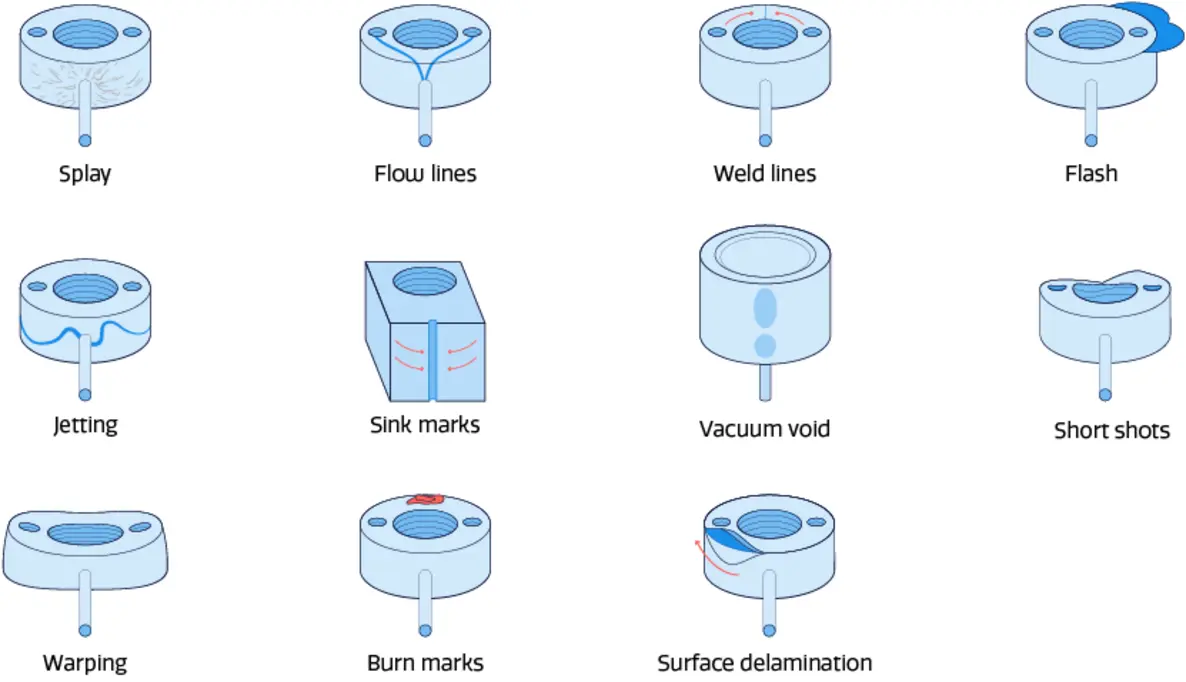
1. Bubbles and Silver Streaks in Molded Parts
Problem: Visible internal bubbles or silvery streaks mar the surface clarity of polycarbonate components. In medical environments, these not only affect appearance but also signal a risk of incomplete polymer structure, compromised part strength, or poor cleaning/sterilization.
Root Causes:
- The most common reason is moisture not driven out of the resin before processing. Polycarbonate is highly hygroscopic and even small moisture traces decompose into gas during melt, causing streaks and bubbles. Sometimes, volatile contaminants or degraded plastic in regrind have a similar effect.
- Poor venting in the tool and rapid fill speeds can trap gases.
Actionable Solutions:
- Always pre-dry medical-grade polycarbonate resin according to thickness and supplier recommendations—typically at 110–120°C for 4–6 hours. Use a hopper dryer with dewpoint control. Target residual moisture below 0.02% before molding.
- Never process undried granules or sheets.
- For thick parts or humid environments, double drying time or consider in-line moisture analysis.
- Clean hoppers of dust/regrind. Switch to dedicated medical-only material where batch traceability matters.
- Adjust injection speed and venting if air traps remain.
2. Crack Formation after Sterilization
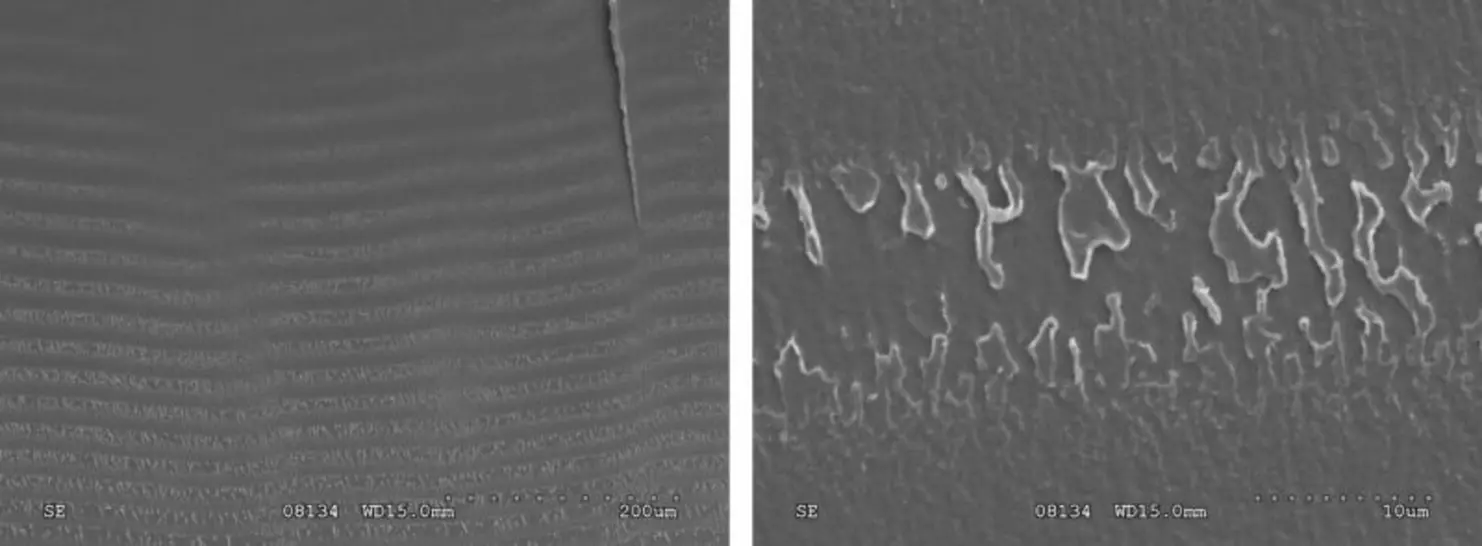
Problem: Parts that look fine after manufacturing develop visible cracks, cloudiness, or even break apart following repeated sterilization cycles (e.g., steam autoclave, EtO, gamma, or chemical disinfectants). These failures are a leading reason for customer returns and regulatory rejection.
Root Causes:
- Internal stress left over from high-speed molding, fast-cooling, thick/thin transitions, sharp corners, and over-tightened screws or press fits.
- Contact with water, steam, or chemical sterilants accelerates environmental stress cracking (ESC), as does exposure to harsh detergents or solvents.
- Stress concentration near inserts, gates, weld lines, or after assembly tightening.
Actionable Solutions:
- For any molded medical part, add a post-molding annealing (stress relief) step. Heat the part just below polycarbonate’s glass transition temperature (125–130°C) for 1–2 hours, then cool slowly. This allows relaxation of residual stress.
- Minimize sharp corners, thin walls, narrow flow channels, and spot anneal stress risers if redesign is not possible.
- Choose PC resin grades certified for repeated sterilization and stress-crack resistance (ask suppliers for data—e.g., for steam, gamma, EtO cycles).
- During insert molding, preheat any metals to minimize rapid cooling at interfaces.
- Use controlled torque values for screws and avoid over-tightened connections.
- For high-stress areas or difficult geometries, consider PC/ABS alloys shown to improve toughness under repeated stress.
3. Fogging, Haze, and Loss of Transparency
Problem: Medical housings or connectors show cloudiness or surface haze, reducing visibility of internal fluids or mechanisms. For IV sets, diagnostics, or surgical tools, this is a user safety and compliance problem.
Root Causes:
- Using commodity PC grades rather than medical-specific materials, which lack strict impurity, biocompatibility, or process consistency.
- Overheating, excessive residence time, or repeated recycling degrades polymer chains and releases low molecular weight byproducts, leading to loss of optical clarity.
- Surface contamination from contact with mold-release agents, production oils, or improper cleaning steps.
Actionable Solutions:
- Specify true medical-grade polycarbonate with documented compliance (e.g. ISO 10993, USP Class VI) and batch traceability.
- Track each batch from receipt to finished goods—do not mix in regrind or off-grade materials for medical applications.
- Keep melt temperatures within the supplier’s range; avoid holding resin hot for more than specified times.
- Clean molds thoroughly between lots and use only approved processing aids.
- Enhance surface cleaning of finished parts with validated processes that avoid strong bases or aggressive solvents.
4. Assembly Gap and Poor Fit (Tolerance Issues)
Problem: Polycarbonate parts sit uneven, exhibit visual gaps, or allow movement/“shaking” when assembled into device housings or modules. Tolerance stack-up and dimension shifts are frequent in medical assemblies requiring a watertight or airtight fit.
Root Causes:
- Manual trimming, inconsistent machining operations, or uncontrolled batch-to-batch process drift.
- Inadequate process capability in forming, CNC, or finishing stages leaves critical holes, slots, or mating faces out of spec.
Actionable Solutions:
- Shift from manual trimming to fully automated CNC or robotic finishing processes for reliable, repeatable dimensions.
- Establish unified tolerance and inspection standards across the batch; verify with calibrated metrology tools for each production run.
- Use appropriate holding fixtures during machining to prevent warping or shifting.
- Standardize the design of reserved holes and assembly features based on your maximum/minimum fit limits rather than just average dimensions.
- Validate environmental controls (humidity, temperature) during forming as polycarbonate shows moderate thermal expansion.
5. Impurity, Particulate, and Zero Recycled Content Standards
Problem: Microscopic particles, black specks, or contamination is found in molded or machined parts under inspection. For class III devices, this can cause outright batch rejection.
Root Causes:
- Use of non-medical feedstock, regrind, or non-dedicated equipment carrying over contaminants from other plastics.
- Off-spec color or additives not certified for medical.
Actionable Solutions:
- Specify a “zero regrind, zero recycled content” standard for all medical-grade polycarbonate entering your facility.
- Use dedicated equipment, tooling, and handling for medical production only.
- Keep a full material traceability log (lot, date, location, processing records).
- Implement in-line optical or surface inspection and particulate monitoring for each batch.
6. Warpage, Short Shots, and Structural Distortion
Problem: Parts warp after demolding or show incomplete filling (short shots), resulting in functional defects or weak regions.
Root Causes:
- Uneven cooling, poor runner/gate design, incorrect melt or mold temperatures, and unoptimized injection speed/pressure.
Actionable Solutions:
- Use simulation (e.g., Moldex3D, Taguchi DOE) to refine process parameters and gate/runner layout for your part geometry.
- Best parameter ranges for difficult geometries typically include melt temperature ~300°C, moderate/high injection speed (e.g., 60–80 mm/s), 10 MPa packing pressure, and well-controlled coolant temperature (~100°C).
- Validate cooling uniformity and avoid hot spots in multi-cavity tools.
Regulatory Compliance and Testing Considerations
- Ensure all materials entering production are traceable to medical-grade documentation (ISO 10993, USP Class VI, etc.).
- For sterilized parts, validate part durability for the full required sterilization cycle count by method (autoclave, gamma, EtO).
- Institute regular process capability (Cp, Cpk) monitoring and root-cause tracking for repeated defects.
- Review inspection, cleaning, and packaging rooms for medical compliance, especially for particulate and microbial control as required by the device class.
Conclusion
Medical grade polycarbonate offers excellent performance for device manufacturers but remains susceptible to process-induced defects. Most recurring problems are preventable by focusing on material drying, validated process controls (temperature, speed, pressure), post-molding annealing, careful material selection (certified and batch-traceable only), automated finishing, and rule-based assembly protocols. When issues are identified, an immediate review of both supplier process parameters and in-plant controls—matched to the above solutions—will help minimize risk of product failure, customer complaints, and regulatory non-conformance.