Materials, Design & Development, Quality & Testing, Regulation & Standards
Medical-Grade TPU Selection: How Sterilization and Device Context Change Validation
Updated
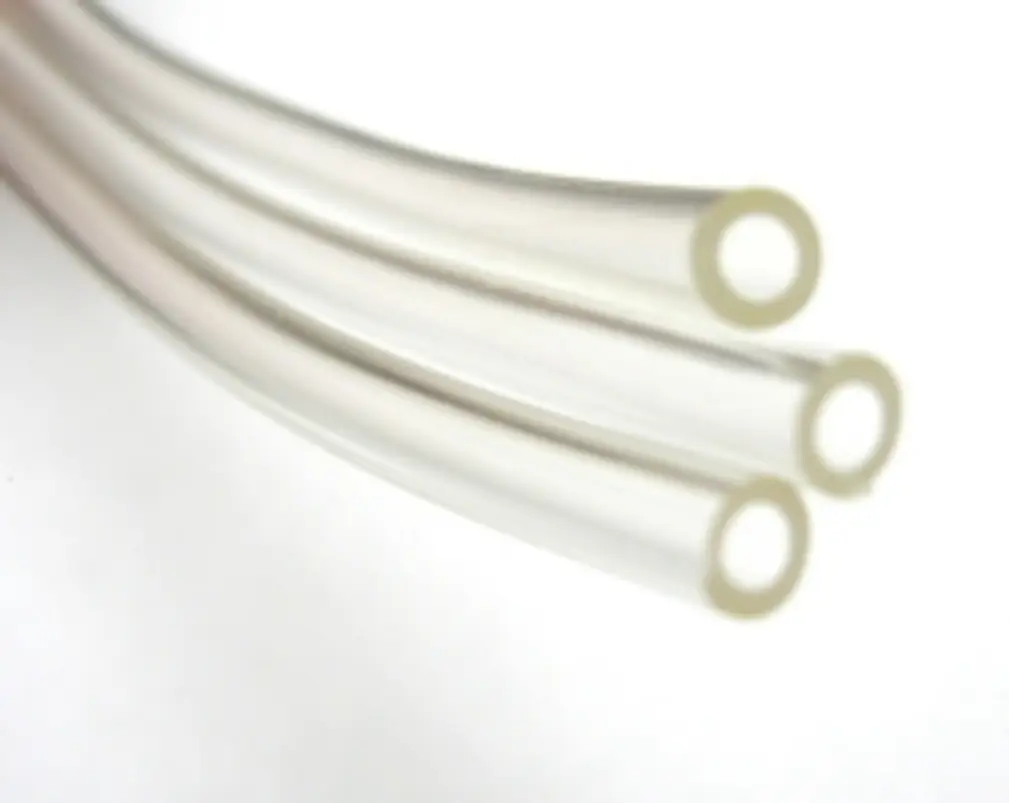
A TPU resin described as medical grade is a useful starting point, not a finished qualification decision. The label may indicate controlled formulation, manufacturing support, and available biological-evaluation data. It does not establish that a finished catheter, wearable, tube set, film, connector, or reusable component is suitable for its actual clinical use.
For medical-grade TPU sterilization and validation, the central question is not simply whether the polymer is biocompatible. It is whether the final, processed device remains safe and performs as intended after sterilization, aging, packaging, transport, and use.
That distinction matters most where the device has long patient contact, contacts blood or internal tissue, needs clarity, handles a drug or aggressive fluid, or must survive repeated steam sterilization.
Start with the device, not the resin datasheet
TPU is a broad material family. Grades can differ in chemistry, hardness, stabilizer package, colorability, hydrolysis resistance, radiation response, and processing behavior. A material that works well for a short-term skin-contact film may not be appropriate for a long-term catheter component. Likewise, a transparent tube that remains flexible after ethylene oxide sterilization may yellow or lose properties after radiation.
Before comparing grades, document the intended use in enough detail to make a defensible material decision.
At minimum, define:
- Patient-contact type: intact skin, mucosal membrane, breached or compromised surface, external communicating pathway, blood path, tissue, or bone.
- Contact duration: transient, prolonged, or permanent exposure. Under the commonly used ISO 10993-1 framework, these are generally up to 24 hours, more than 24 hours through 30 days, and more than 30 days.
- Contact area and geometry: a small molded clip and a large-area wound-contact film do not create the same exposure scenario.
- Use condition: temperature, moisture, flexing, pressure, abrasion, body fluids, drugs, disinfectants, lipids, or cleaning agents.
- Single-use or reusable status: reusable devices add cumulative cleaning and sterilization exposure.
- Sterilization method and dose or cycle: specify the actual planned process rather than writing “sterilizable.”
- Packaging and shelf life: include the sterile barrier, package materials, storage conditions, and claimed aging period.
- Manufacturing route: extrusion, injection molding, blow molding, welding, bonding, overmolding, printing, coating, or additive manufacturing can all change the finished article.
This profile should be available before the first supplier request. It gives the resin supplier, contract manufacturer, toxicologist, and test laboratory a common definition of the problem.
What “medical grade” should mean in practice
There is no universal regulatory approval created by the phrase “medical grade.” In practical sourcing, a credible medical TPU program commonly offers some combination of controlled raw materials, lot traceability, change notification, quality-system support, formulation disclosure under appropriate confidentiality controls, and prior biological-evaluation information.
Those features can reduce uncertainty. They do not transfer the supplier’s test results to every device made from the resin.
A supplier may have biological data on molded plaques, pellets, or a specific reference article. Your finished device may contain a different surface area, processing history, pigment, adhesive, weld, coating, printing ink, lubricant, or packaging interaction. It may also receive a different sterilization exposure.
Treat supplier data as evidence that helps build a rationale, not as a replacement for finished-device evaluation.
Questions to ask a TPU supplier
Request answers in writing and compare them with the actual device requirements:
- What is the exact grade, revision, and formulation status?
- Which biological tests have been performed, on what test article, and under what contact category?
- Is the data relevant to the planned patient-contact type and duration?
- What sterilization methods, dose ranges, and cycle counts have been evaluated?
- Which properties were checked after sterilization: tensile behavior, elongation, hardness, color, clarity, dimensional stability, extractables, or biological endpoints?
- Is the grade ester-based, ether-based, aromatic, aliphatic, or otherwise formulated for a particular environmental resistance profile?
- What additives, colorants, processing aids, or stabilizers are present or permitted?
- What notification period applies to formulation, site, raw-material, or process changes?
- What lot documentation and traceability can be supplied?
- Are there known limitations involving steam, radiation, solvents, drugs, lipids, or repeated disinfection?
A vague statement that a material “meets ISO 10993” is not enough. Ask which parts of the ISO 10993 series were considered, how the samples were prepared, and whether the evidence applies to the finished device configuration.
Let ISO 10993-1 drive the biological evaluation plan
ISO 10993-1 frames biological evaluation as part of risk management. It is not a fixed list of tests that every medical device must complete. The needed evidence depends on the nature and duration of body contact, material characterization, existing knowledge, manufacturing information, and toxicological assessment.
For a TPU device, the evaluation should account for the complete patient-contacting system. That can include the polymer itself as well as pigments, radiopaque additives, plasticizers if used elsewhere in the assembly, adhesives, primers, weld residues, inks, coatings, mold-release residues, cleaning residues, and sterilization residuals.
Chemical characterization and toxicological risk assessment can be particularly valuable where a device differs from the supplier’s reference article. They help identify whether processing or sterilization has introduced or changed chemicals that could be available to the patient.
For example, a short-term intact-skin wearable may focus on endpoints relevant to cytotoxicity, irritation, and sensitization, supported by a risk-based rationale. A device with prolonged mucosal contact, blood contact, or long-term internal exposure may require a substantially broader assessment. The correct plan should be developed with biological-evaluation and toxicology expertise, not inferred from a generic resin certificate.
Sterilization can change both the material and the validation burden
Sterilization is an input to material selection, not a final manufacturing detail. It can alter polymer chemistry, mechanical behavior, appearance, and extractables. It also interacts with packaging and product geometry.
Ethylene oxide: often suitable, but residual control remains part of the plan
Ethylene oxide (EtO) is a low-temperature method widely used for heat-sensitive polymer devices. It can be a practical route for TPU tubing, complex assemblies, and devices with narrow lumens because the gas can penetrate suitable packaging and complex geometries.
However, EtO validation is not only a question of whether the TPU still looks and feels acceptable. The full process must account for sterilant residuals, aeration, package configuration, load pattern, worst-case device geometry, and the applicable residual limits. A device with a long narrow lumen, absorbent components, or large polymer mass may need special attention during residual assessment.
EtO also exposes the finished device to humidity and temperature. Check dimensional stability, tensile and elongation properties, bond strength, lumen patency, and functional performance after the validated cycle and after aging.
Gamma and e-beam: evaluate radiation dose effects early
Gamma and electron-beam sterilization are efficient terminal methods, but their effects depend heavily on TPU chemistry and formulation. Radiation can cause chain scission or crosslinking, which may affect flexibility, tensile strength, elongation, hardness, and stress-crack resistance.
Appearance can also matter. Some TPUs, particularly aromatic grades, may discolor or yellow after radiation. That may be a cosmetic issue for an opaque housing, but it can be a functional issue for clear tubing used to observe bubbles, blood, or fluid flow.
Gamma has deeper penetration than e-beam. This affects product and packaging suitability, but neither route should be selected only on penetration or throughput. Test the final formulation at the relevant sterilization dose range, including the upper dose that the product may receive during routine processing.
Vaporized hydrogen peroxide: validate the whole surface system
Vaporized hydrogen peroxide and related low-temperature hydrogen peroxide processes may be attractive for heat-sensitive products. Yet compatibility depends on the device design, packaging, additives, coatings, and surface treatments.
Do not assume the base TPU determines compatibility. A hydrophilic coating, printed marking, adhesive, colorant, or lubricious surface treatment can be the limiting element. Examine visual changes, residue, coating integrity, friction, bond strength, and device function after exposure.
Steam and dry heat: identify the limitation before committing to a reusable design
High-temperature steam is often a difficult fit for TPU devices. Heat, moisture, and pressure can promote hydrolytic degradation or physical change in susceptible grades. Risks include softening, distortion, loss of mechanical properties, tackiness, embrittlement after repeated cycles, and failure at joints or welded seams.
This does not mean every TPU product is automatically excluded from steam exposure. It means a reusable, steam-sterilized design requires grade-specific evidence using the actual cycle, device configuration, and intended number of cycles.
Where repeated autoclaving is a core requirement, assess alternative materials early rather than trying to rescue an unsuitable TPU after design verification. A different TPU chemistry may help in some cases, but another polymer family may provide a more credible route for the required sterilization life.
Processing creates a new test article
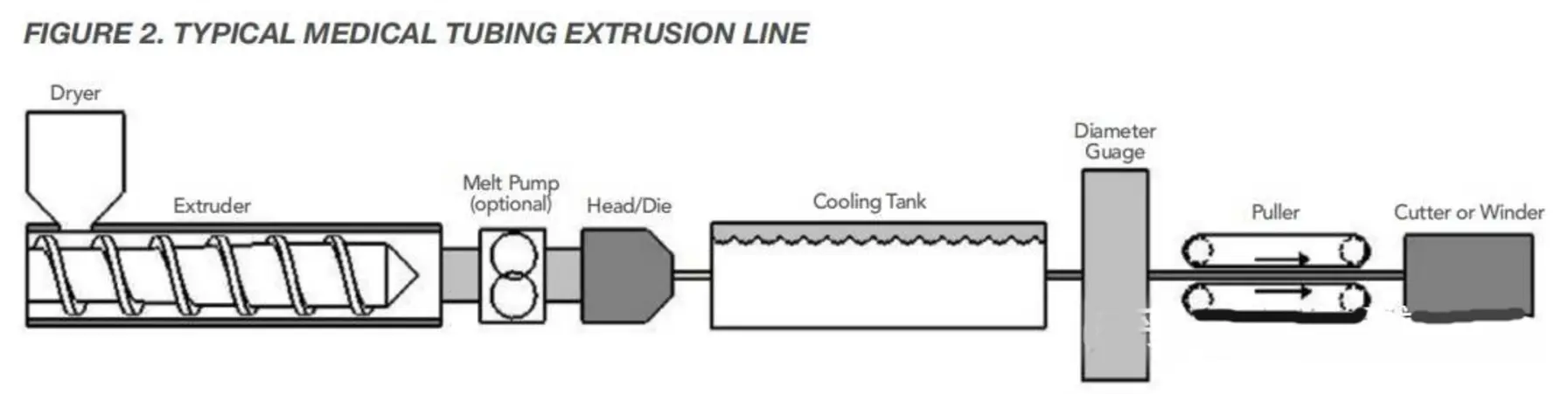
A resin’s safety profile can change once it becomes a device component. Thermal history, residence time, shear, moisture content, regrind, and contamination can all affect a TPU extrusion or molding.
Moisture control is especially important because inadequate drying can contribute to hydrolysis during melt processing. Define drying conditions, maximum residence time, melt-temperature limits, handling controls, and any regrind policy during process development. Then show that routine production remains within those established boundaries.
Joining processes also need attention. RF welding, thermal welding, solvent bonding, adhesive bonding, overmolding, and ultrasonic welding can introduce local stress, degradation, residues, or new interfaces. Validate the joint as part of the device, not merely as a manufacturing convenience.
For tubing, common post-sterilization checks may include dimensions, lumen patency, burst or leak performance, kink resistance, tensile properties, and bond strength. For films and wearables, consider thickness, tear resistance, elongation, adhesion, moisture handling, surface tack, and resistance to the intended cleaning or wear environment.
Packaging and aging belong in the same validation chain
The polymer does not experience sterilization in isolation. It is sterilized inside a packaging system, then stored and transported before use. Packaging can affect sterilant penetration, radiation exposure, moisture retention, and interaction with the device surface.
Evaluate the final device in final packaging where possible. A study on unpackaged plaques may be useful for screening, but it cannot establish sterile packaged-device performance.
Your validation plan should link:
- the specified resin and all patient-contacting materials;
- manufacturing process limits and acceptance criteria;
- the sterilization process and its worst-case conditions;
- package integrity and sterile-barrier performance;
- shelf-life aging conditions;
- transportation or distribution stresses; and
- final functional and biological evaluation.
If the device is reusable, include the maximum claimed number of cleaning and sterilization cycles before performing final functional and biological assessments. Testing only one fresh cycle does not support a multiple-use claim.
A practical selection sequence
Use a staged approach to prevent expensive late-stage changes.
1. Define the clinical and environmental use case
Write the contact category, duration, patient population, use environment, service life, fluid exposure, cleaning exposure, and sterilization route. Identify whether transparency, radiopacity, softness, kink resistance, or weldability is critical.
2. Screen material families and grades against the hardest requirement
The limiting requirement may be repeated steam cycles, long-term implantation, an aggressive drug, very low extractables, or radiation color stability. Eliminate grades that cannot credibly support that condition before optimizing hardness or cost.
3. Review supplier evidence for relevance
Compare the supplier’s test article, formulation, contact claim, and sterilization conditions with your device. Record what can be leveraged and what remains unproven.
4. Build representative prototypes
Use intended production materials, colorants, additives, processing conditions, joining methods, and packaging. Early prototypes should expose issues such as yellowing, weld failure, tackiness, odor, loss of clarity, or dimensional drift.
5. Test after sterilization and aging
Assess the properties that matter to the clinical function, not just a standard tensile panel. Include the expected sterilization condition and credible worst cases.
6. Close the biological evaluation with finished-device evidence
Use chemical characterization, toxicological assessment, existing information, and biological testing as appropriate to the risk profile. Document the rationale under the device risk-management process.
7. Control change after launch
Lock down resin grade, color masterbatch, supplier site, processing window, sterilization parameters, and packaging configuration. Establish change-notification requirements and define when a change triggers re-evaluation.
The selection decision to document
A strong TPU selection record does more than say that a resin is medical grade. It explains why the chosen grade is suitable for a defined device and why the evidence remains applicable after processing, sterilization, packaging, aging, and use.
For a disposable, short-duration, EtO-sterilized skin-contact device, the qualification path may be manageable with a well-supported grade and representative finished-device evaluation. For a long-term internal-contact device, radiation-sterilized clear catheter, or reusable part expected to survive steam cycles, the same TPU label carries much less weight by itself.
Choose TPU only after the device context is clear. That makes sterilization compatibility, biological evaluation, manufacturing controls, and finished-device validation parts of one development decision rather than separate problems discovered late in the project.