Materials, Medical Devices, Manufacturing, Quality & Testing, Regulation & Standards
Practical Applications and Limitations of Polyether Ether Ketone (PEEK) in Medical Engineering
Updated
Introduction
Polyether Ether Ketone (PEEK) has become a leading advanced polymer in medical device engineering due to its unique mechanical, thermal, and chemical properties. This article provides a technical yet practical overview of where PEEK excels, real engineering challenges that come with its use, and situations where its limitations or failure modes demand caution or remediation. If you are designing, sourcing, or qualifying medical devices, understanding PEEK’s biomedical properties, processing hurdles, and performance boundaries is crucial for effective application and risk management.
Why PEEK is Considered for Medical Devices
Choosing materials for implantable and non-implantable medical devices is an exercise in balancing biocompatibility, mechanical match, manufacturability, and compliance. PEEK stands out in this space for several core reasons:
- Mechanical properties similar to bone: PEEK’s elastic modulus (3–4 GPa) is much closer to cortical bone (about 18 GPa) than common metals like titanium (110 GPa), reducing stress shielding and improving load transfer in bone-related implants.
- Sterilization stability: With a melting point near 343°C and high thermal stability, PEEK can withstand repeated autoclave sterilization cycles without significant property loss.
- Biological inertness: PEEK is non-cytotoxic, non-allergenic, and shows negligible adverse response in most tissues, qualifying it for both temporary and long-term implants.
- Imaging compatibility: Unlike metals, PEEK is radiolucent, producing minimal artifact on X-ray, CT, or MRI. This improves post-op monitoring and diagnostic imaging.
- Chemical resistance: PEEK is highly resistant to most chemicals, body fluids, and cleaning agents used in hospitals.
- PFAS-free: PEEK contains no per- or polyfluoroalkyl substances by chemical structure, a growing global requirement for certain device types.
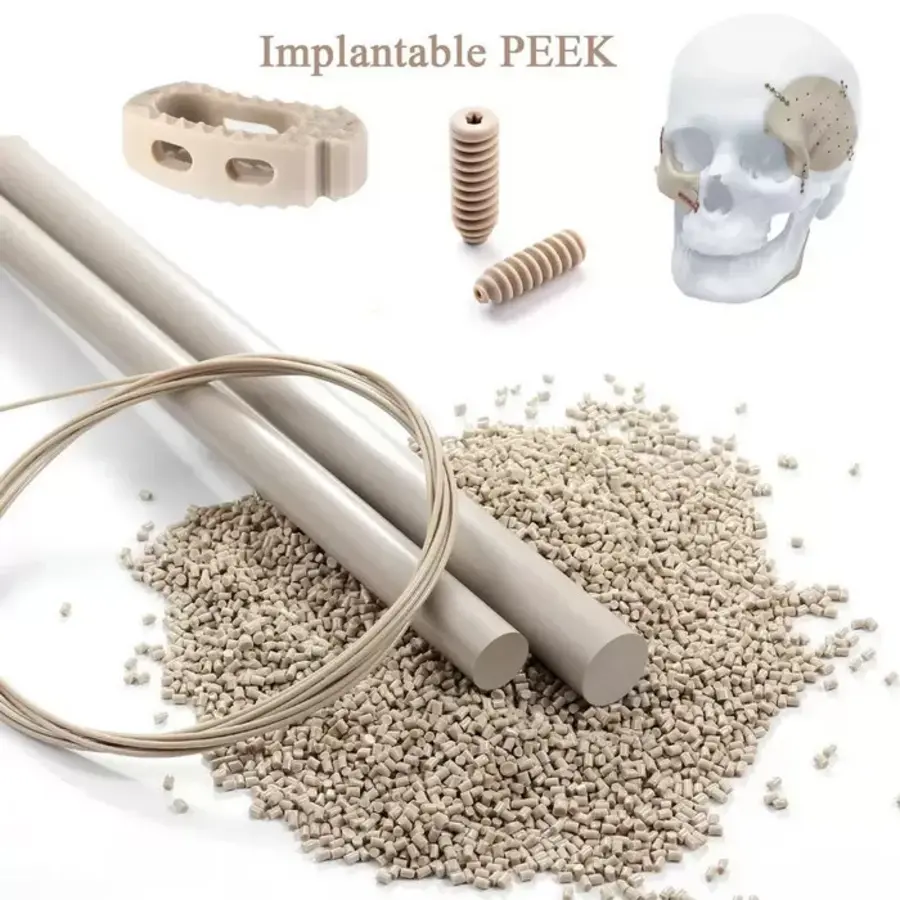
These properties have established PEEK’s presence in spinal cages, trauma plates, dental abutments, bone screws, heart valve components, endoscopic instruments, and more.
Core Biomedical Properties and What They Mean for Device Design
Biocompatibility and Bioinertness
PEEK’s record for biocompatibility is well documented across short-term and long-term implants. However, its biological inertness is a double-edged sword:
- Positive: Low likelihood of inflammation, allergic reaction, or toxicity.
- Negative: Inert surfaces discourage protein adsorption and cellular adhesion, impeding direct bone or tissue integration (osteointegration) without modification.
Addressing Integration
To encourage tissue bonding, manufacturers commonly modify PEEK with:
- Surface roughening (blasting, etching)
- Plasma or chemical activation
- Coatings of bioactive materials (hydroxyapatite, titanium, or antimicrobial agents)
Each approach can increase integration—but introduces its own failure modes and regulatory scrutiny. Wear debris, delamination of coatings (especially metals), and biostability of modified surfaces become new points of validation.
Mechanical Performance and Fatigue Resistance
PEEK’s fatigue resistance, toughness, and resistance to cyclic mechanical stress are major factors in high-load orthopedic, spinal, and trauma applications. Compared to ultra-high molecular weight polyethylene (UHMWPE), PEEK generally offers:
- Higher wear and creep resistance
- More consistent load transfer in bone-mimicking applications
However, PEEK is not as strong as metals under extreme load, nor as tough as some bioresorbable polymers under impact.
Processing Challenges and Design Controls
Manufacturing Methods
Common PEEK processing methods include:
- Injection molding (for high volume and shape complexity)
- Extrusion (for rods, sheets, or tubes)
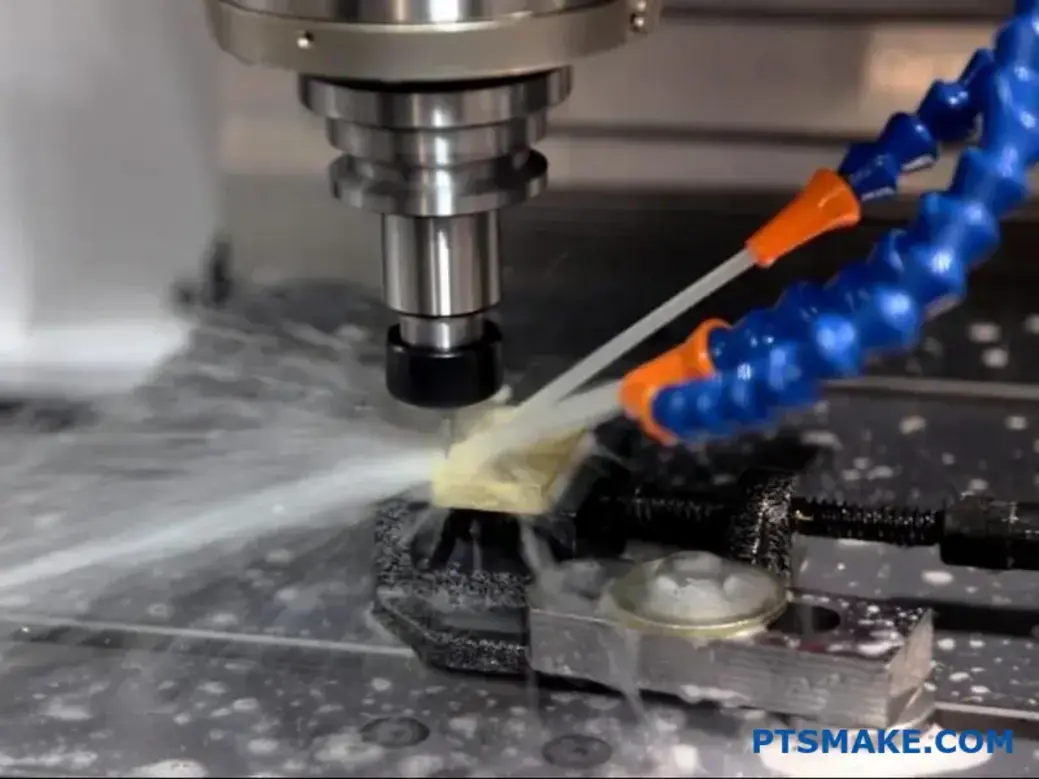
- CNC machining (for finished precision parts)
- Additive manufacturing (3D printing, mostly FDM for custom geometries)
Each route presents unique quality and reproducibility challenges:
- High temperature requirements: Melt processing must reach over 340°C, demanding specialized machines and tooling.
- Machining risks: Poor chip evacuation, low thermal conductivity, and residual stress can cause warping, micro-cracking, or dimensional instability.
- 3D printing hurdles: Achieving optimized crystallinity, layer adhesion, and porosity without compromising biocompatibility remains an active area of research.
Key Considerations When Processing PEEK for Medical Devices
- Moisture uptake: PEEK absorbs little water (~0.1%), ensuring stability in autoclave and in vivo.
- Filler compatibility: Reinforced PEEK grades (e.g., carbon or glass fiber) offer higher strength or stiffness but can introduce particulates, anisotropy, or compromise biocompatibility if not fully qualified.
- Finish and cleanliness: All traces of lubricants, machining fluids, and particulates must be removed to pass ISO 10993 and FDA requirements.
Cost
PEEK is significantly more expensive per kilogram than most engineering polymers, due to both raw material and specialized processing costs. This confines its use to high-value components where its advantages are essential.
Failure Modes and Engineering Limitations
Wear and Particle Generation
- PEEK shows excellent wear resistance, but abrasive conditions or micro-motion at articulating interfaces (e.g., joint replacements) can still generate biologically active particulates. These may contribute to osteolysis over long implant periods.
- Unfilled PEEK may not be suitable for very high wear environments compared to UHMWPE or when articulating against hard ceramics or metals.
Coating Delamination
- Bioactive, antimicrobial, or metallic coatings on PEEK (e.g., hydroxyapatite, titanium) can delaminate or wear off, especially under repetitive mechanical strain. This is a significant regulatory focus and warrants aggressive validation through mechanical and aging tests.
- Delaminated particles can trigger immunological responses, inflammation, or device loosening.
Surface Cracking and Interfacial Failures
Improper processing, high internal stresses, or poor finishing can cause micro-cracking or interface failures—especially at notches, thread roots, or where PEEK contacts dissimilar materials.
Hydrophobicity and Limited Osseointegration
PEEK’s native surface is hydrophobic and of low surface energy, minimizing natural protein absorption and bone anchoring. Applications needing strong, direct bone integration (e.g., certain craniofacial plates or uncoated joint implants) present an ongoing challenge without post-processing or coatings.
Regulatory and Testing Hurdles
- Biocompatibility must be device-specific: Passing general ISO 10993 or USP Class VI does not guarantee approval of novel designs or formulations. Long-term studies, particle release analysis, and evidenced patient safety are increasingly required.
- Processing consistency is scrutinized: Small changes in processing (cooling rate, crystallinity, surface finish) can affect the final properties and must be controlled and validated batch-to-batch.
- Surface modifications must be validated: Any change for enhanced tissue bonding or antimicrobial effect creates a new combination product subject to further safety and efficacy review.
PFAS-Free Status and Regulatory Relevance
Unlike PTFE or other fluoropolymers, PEEK contains no PFAS. As PFAS regulations tighten globally, PEEK is positioned as a safe, advanced polymer option for applications where fluorinated chemistries are restricted or undesirable. This makes it especially relevant for:
- Pediatric, high-risk, or long-term implants
- Device families under new environmental compliance regulations
Where Not to Use PEEK or Where to Proceed with Caution
- Extreme-impact or high-wear joints: PEEK may not match UHMWPE or highly cross-linked polymers for articulating large joint surfaces under heavy load.
- Applications demanding direct, strong osseointegration without modification: Unless a proven surface treatment is used, PEEK may not integrate as well as metals or specially designed ceramics.
- Cost-sensitive disposable devices: The high base material and processing cost rarely justify PEEK in low-value, single-use instruments unless a clear technical advantage exists.
Summary Table: PEEK in Medical Devices—Pros, Cons, and Context
| Property | Key Advantage | Limitation/Challenge | Clinical Context |
|---|---|---|---|
| Mechanical strength | High, bone-like modulus | Not as strong as metals | Spinal cages, bone plates |
| Biocompatibility | Proven, inert, non-allergenic | Inert surface (poor direct adherence) | Long-term and short-term implants |
| Chemical resistance | Excellent | None major | Sterile, aggressive environments |
| Processability | Molding, machining, 3DP | High temp/special equipment | Custom shapes, small or mid-size runs |
| Wear resistance | High, with self-lubrication | Generates wear particles under some conditions; not for all joints | Joints, articulating implants |
| Surface modifiability | Can be coated or roughened | Coating delamination, test complexity | Where integration or antimicrobial needed |
| Radiolucency | No imaging artifact | None | Post-op imaging, diagnosis |
| Regulatory status | ISO/FDA approved grades | Surface mods increase scrutiny | Global markets, new device designs |
| Cost | Justifiable for implants | High for disposables | Implants, reusable devices |
| PFAS status | PFAS-free by chemistry | None | Regulatory-driven applications |
Practical Application Guidelines
Use PEEK for:
- Devices where biocompatibility and bone-like mechanical properties are critical.
- Situations demanding repeated sterilization or chemical exposure.
- Applications where imaging clarity is required.
- Where avoidance of metals or PFAS is non-negotiable.
Proceed with caution or seek alternatives for:
- High-wear, high-impact joints
- Applications where direct bone in-growth is essential, unless paired with validated surface engineering
- Mass-market or low-value disposables
Mandate robust validation for:
- Any new coating or surface-modified PEEK
- Large-load-bearing or long-term implant applications
- Additive manufacturing workflows where part consistency and density are difficult to confirm
Conclusion
PEEK offers an advanced solution for many demanding medical device applications, provided its unique strengths and fundamental limitations are clearly understood and managed. Rigorous design control, process validation, and continuous risk assessment are essential for maximizing device safety and performance.