Materials, Design & Development, Manufacturing, Quality & Testing
Shape Memory Alloy Design Limitations: Response Speed, Fatigue, Control, and Cost
Updated
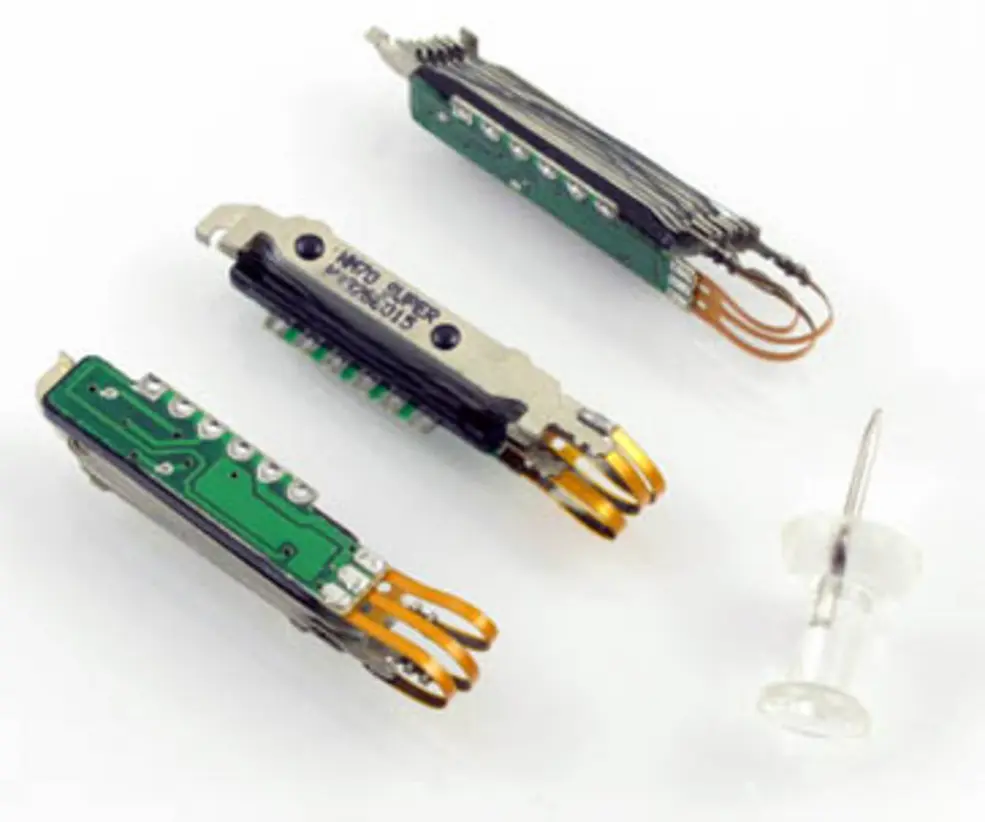
Shape memory alloys (SMAs), most commonly nickel-titanium alloys known as Nitinol, can produce useful motion from a compact wire, spring, strip, or tube. They are quiet, have a high force-to-mass ratio, and can simplify mechanisms that would otherwise need motors, gears, or solenoids.
Those advantages do not make an SMA a drop-in actuator. An SMA is a thermomechanical system: temperature, stress, geometry, heat transfer, electrical input, mounting, and prior cycling all affect its output. The main shape memory alloy design limitations are usually not whether the material can move, but whether it can move quickly enough, accurately enough, and for enough cycles at an acceptable total cost.
Start with the application, not the material effect
An SMA actuator is often practical when the system needs a modest stroke, high force in a small package, low noise, and intermittent operation. Examples include latches, release mechanisms, valves, compact positioning features, and mechanisms that need a one-time or infrequent deployment action.
It is less attractive when the device needs high-frequency reciprocal motion, continuous rotation, tightly repeatable open-loop positioning, or immediate response after every command. In those cases, a motor, voice coil, solenoid, pneumatic actuator, or conventional spring mechanism may provide a more direct solution.
Before selecting wire diameter or an alloy condition, define the actual duty cycle:
- Required stroke at the load, including friction and off-axis loads.
- Force throughout the travel, rather than only peak force.
- Time allowed for heating and, separately, return or cooling.
- Ambient temperature range and heat-sinking paths.
- Number of required cycles over device life.
- Position, force, and response-time tolerances.
- Available electrical power and allowable surface temperature.
- Consequences of a partial stroke, delayed return, or actuator fracture.
This converts an appealing material demonstration into an engineering requirement set.
Response speed is usually limited by cooling
Electrical resistance heating can raise the temperature of a small SMA wire quickly. Return motion is generally slower because the actuator must reject heat to its surroundings before it transforms back. Passive cooling by natural convection is often the rate-limiting part of the cycle.
This creates an important asymmetry: a mechanism may pull quickly when energized but release slowly after power is removed. A product demonstration can therefore look responsive on its first cycle while failing to meet its intended repeated-cycle rate.
SMA response time depends on more than applied current. Important factors include:
- Surface-area-to-volume ratio. Fine wire cools faster than a larger cross-section but may provide less absolute force and can be more difficult to terminate reliably.
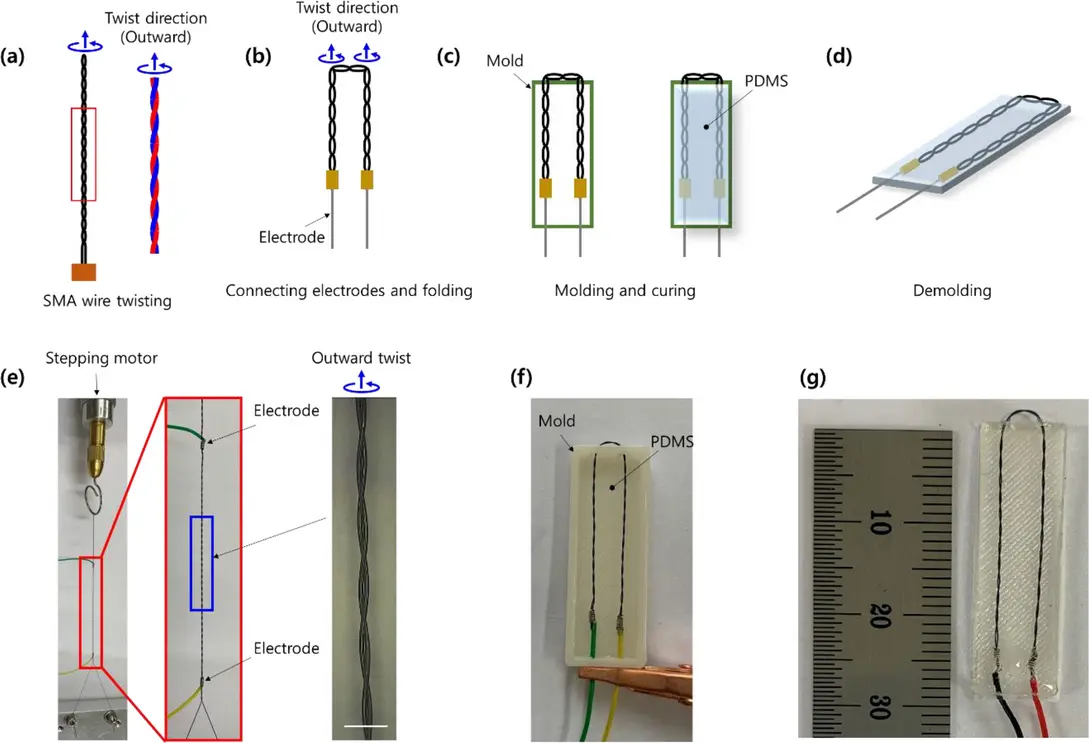
- Thermal mass of the assembly. Crimps, anchors, conductive frames, encapsulation, and attached loads can either remove heat or retain it.
- Heat-transfer environment. Still air, moving air, liquid, contact conduction, and an enclosed housing produce very different cooling behavior.
- Temperature range. The actuator must pass through its transformation range; starting from a warmer ambient condition changes both timing and available temperature margin.
- Heating uniformity. Uneven electrical or thermal conditions can create local hot spots, incomplete transformation, and inconsistent displacement.
Design for cooling from the beginning
Do not treat cooling as a late-stage packaging issue. Model it as part of the actuator architecture. A thin wire, forced airflow, a controlled thermal path, or an actively cooled arrangement may improve cycle time, but each adds a tradeoff in force, noise, power, space, complexity, or cost.
A return spring or opposing SMA element can restore motion direction, but it does not eliminate the need for the active element to cool. For two-way motion using antagonistic SMA wires, both elements must be managed thermally and mechanically. That can increase control complexity rather than simply doubling available movement.
For medical devices, thermal design also needs to account for accessible surfaces, nearby temperature-sensitive materials, and the complete use environment. Electrical input alone is not an adequate safety or performance measure; the temperature distribution of the final assembly matters.
Usable strain is lower than a headline material value
SMA data often highlight comparatively large recoverable strains. A mechanism should not be designed around the maximum strain visible in a laboratory stress-strain curve. High strain can reduce life, worsen residual deformation, increase variability, and leave little margin for installation error or unexpected loading.
The useful actuator stroke is also reduced by compliance elsewhere in the system. Flexing mounts, elongating crimp zones, friction in guides, backlash, and a soft return spring can consume a substantial part of the nominal SMA contraction. A wire that appears to have ample free stroke may produce insufficient loaded travel once installed.
Use a mechanism that converts a limited linear strain into the required function with minimal parasitic compliance. Levers, flexures, compliant links, and latching features can be useful, but they must be evaluated for their effect on force, friction, tolerance stack-up, and fatigue.
A practical early calculation should include:
- Required output travel and force at each travel point.
- Lost motion from tolerance, compliance, and friction.
- Required SMA active length to create the remaining stroke at a conservative working strain.
- Mechanical preload and the force needed for reset.
- Space for anchors, electrical connections, insulation, and strain relief.
If this produces an actuator length or geometry that does not fit the device, changing the wire diameter alone may not solve the problem.
Functional fatigue changes actuator behavior before fracture
SMA fatigue is not limited to a wire breaking. Repeated transformation and mechanical loading can change functional behavior: available stroke can drift, transformation temperatures can shift, force can decline, and residual strain can develop. These changes may cause a device to miss its functional requirement while the actuator remains physically intact.
Mechanical fatigue and functional fatigue are related but distinct design concerns. Mechanical fatigue concerns crack initiation and fracture. Functional fatigue concerns loss of repeatable actuator performance. Both matter in cyclic products.
The most influential conditions include strain range, stress level, peak temperature, heating rate, load path, surface condition, alloy processing, heat treatment, mounting quality, and environmental exposure. Bending, sharp termination features, rubbing, kinks, and local overheating can create concentrated damage that bulk calculations do not reveal.
Test the installed actuator, not only a coupon
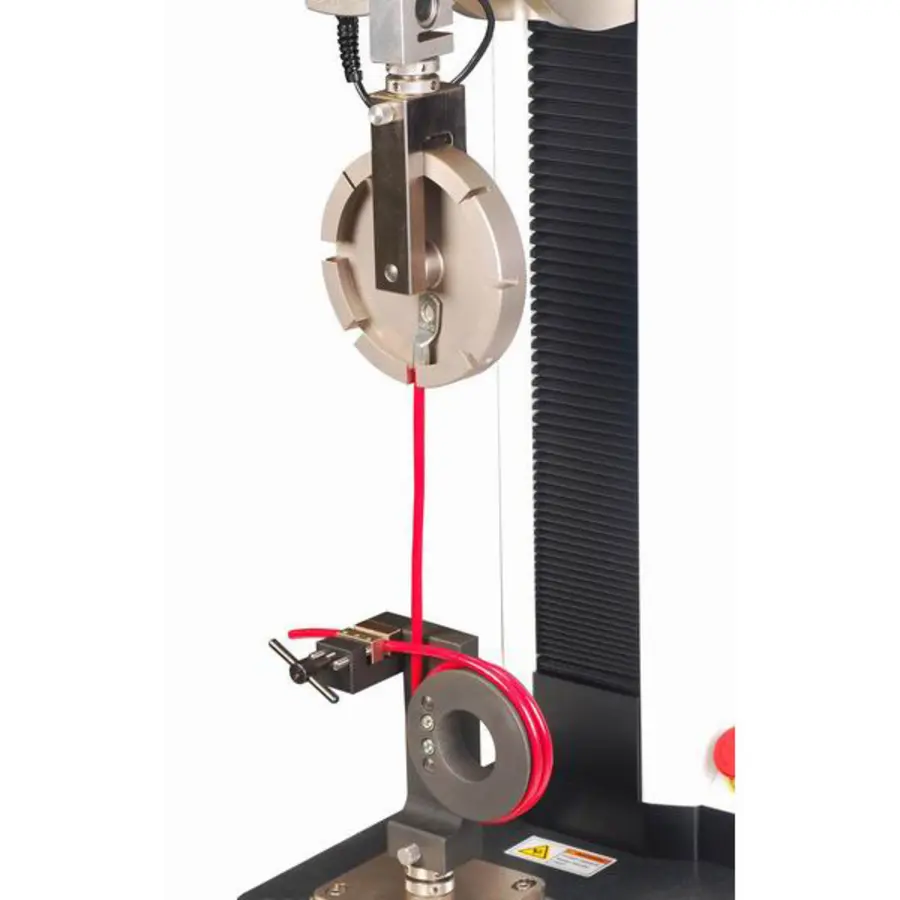
Supplier data can support initial screening, but it cannot fully predict behavior in a specific mechanism. The production-intent assembly should be cycled under representative electrical input, load, travel, ambient temperature, mounting, and environmental conditions.
Monitor more than pass/fail operation. Useful measurements include:
- Displacement at defined loads.
- Force at defined positions.
- Heating and cooling time.
- Electrical resistance, where appropriate for the design.
- Input current, voltage, and energy per cycle.
- Actuator and nearby component temperatures.
- Residual offset after cycling.
- Changes in transition timing and output across life.
Define acceptance limits for these functional outputs before testing begins. A fracture-only criterion can conceal an actuator that has already become unusable.
Hysteresis and temperature sensitivity complicate control
An SMA does not behave like a linear electromagnetic actuator. During heating, transformation begins and finishes over a temperature range. During cooling, the reverse transformation occurs over a different range. This hysteresis means the same measured temperature or electrical resistance may correspond to different positions depending on whether the actuator is heating or cooling and on its recent operating history.
Stress also changes the transformation response. A wire under a different load may require a different temperature to transform and can deliver a different stroke. Ambient temperature changes matter for the same reason. A current value that achieves full actuation in a cool laboratory may underperform in a warmer enclosure, or overheat the actuator in a cold environment.
Open-loop current or timed pulses can be adequate for a simple binary function with broad tolerance, such as a one-time release. They are less suitable where the device needs accurate intermediate position or stable force over changing loads and ambient conditions.
Match the control method to the required accuracy
For low-precision functions, a calibrated pulse with mechanical end stops may be sufficient. The end stop should tolerate the expected force and repeated impacts without transferring damaging strain to the SMA element.
For tighter control, use feedback appropriate to the device requirement. Options may include position sensing, temperature sensing, force sensing, or electrical-resistance-based estimation. Resistance can offer useful information because it changes with temperature and phase state, but it is not a universal direct position measurement. Lead resistance, contact stability, load, aging, and thermal gradients affect the signal.
A robust controller usually needs current limiting, overtemperature protection, state-aware logic for heating and cooling, and fault handling for sensor loss or stalled motion. It should also be validated at the full ambient temperature and load range, not only at nominal room conditions.
Transformation temperature is a system requirement
Nitinol transformation temperatures are influenced by alloy composition, processing, heat treatment, and applied stress. Specifying only “Nitinol wire” is therefore insufficient. The design must define the transformation range needed for its operating environment and its loaded condition.
If the transition temperature is too close to normal ambient temperature, unintended motion or reduced holding margin can occur. If it is too far above ambient, the system may require excess power and create unacceptable heating of nearby components. For a thermally triggered device, environmental excursions must be considered alongside the intended trigger condition.
Request material documentation that is meaningful for the function, then confirm performance in the final geometry. The formed and heat-set state of a spring or shaped component can behave differently from a straight wire sample.
Manufacturing cost is more than material price
Nickel-titanium material is comparatively expensive, but raw material price is only one contributor. Forming, heat setting, surface finishing, cleaning, joining, inspection, lot control, and functional testing can dominate the cost of a finished actuator assembly.
SMAs are sensitive to processing history. Small changes in heat treatment, geometry, surface condition, or final assembly stress can alter the actuator response. That makes process development and supplier control important, especially when a device depends on narrow timing, force, or temperature limits.
Common manufacturing questions include:
- Can the supplier consistently provide the specified diameter, transformation behavior, surface condition, and mechanical properties?
- Does forming require a defined heat-set process, and how will shape consistency be verified?
- Can the selected termination method avoid local damage, excess resistance, and heat sinking?
- Are cleaning and finishing methods compatible with the application and subsequent assembly steps?
- What incoming inspection and lot traceability are needed to control variation?
- Can the actuator be functionally tested after integration without consuming excessive production time?
For regulated medical products, material selection and manufacturing controls must fit the device’s risk management, verification, validation, and change-control processes. An actuator material is not automatically suitable for patient contact, sterilization exposure, or a particular clinical environment simply because Nitinol is used in other medical devices.
A practical SMA selection decision
Shape memory alloy actuation is a strong option when compactness, silence, high specific force, and simple intermittent motion outweigh the penalties of thermal response, hysteresis, and qualification effort. It is a weaker option when the requirement is fast continuous cycling, highly precise open-loop positioning, or low unit cost at minimal development risk.
Use a prototype to answer system questions early: Can the assembly cool at the required rate? Does it still meet stroke and force after cycling? Does it operate across expected temperature and load extremes? Can its output be controlled with the sensors and electronics the product can support?
If the answer depends on narrow temperature margins, maximum strain, or unverified life assumptions, redesign the mechanism or compare alternative actuator technologies before committing to the SMA. The material’s shape-memory effect is valuable, but reliable products come from managing the full thermal, mechanical, electrical, and manufacturing system around it.