Quality & Testing, Regulation & Standards, Medical Devices
How to Choose Sterilization Indicators and Investigate Failed Results
Updated
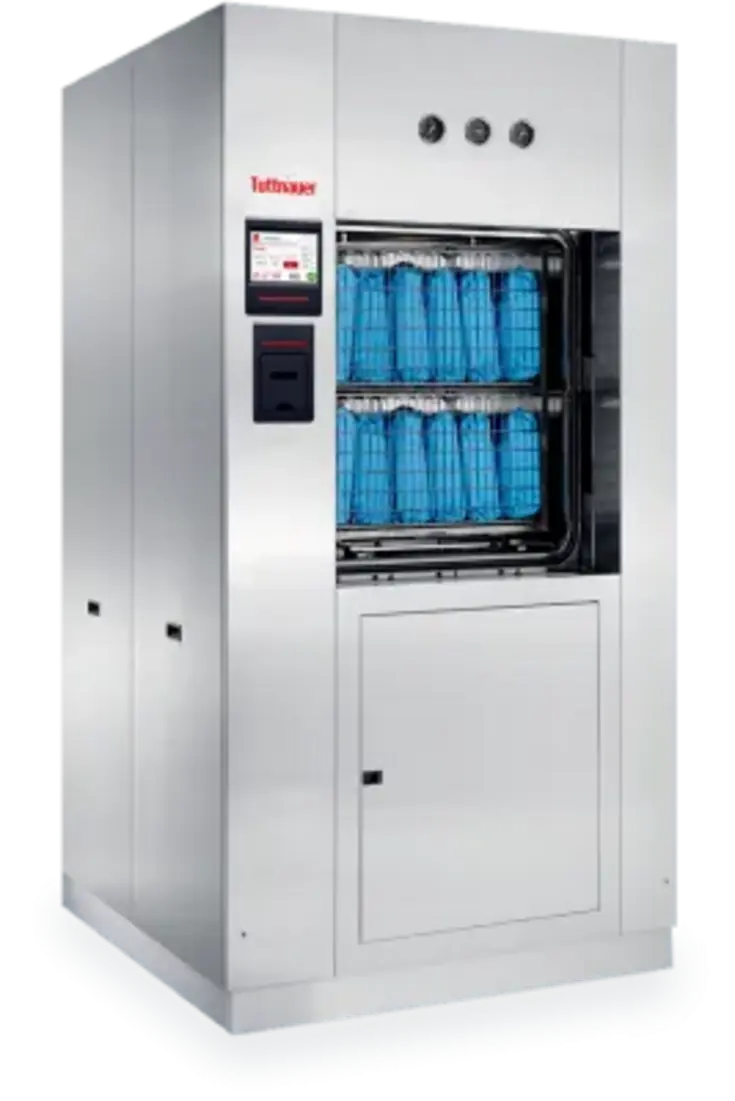
A changed strip of sterilization tape does not mean the contents of a tray are sterile. It normally shows only that the outside of a package was exposed to a process. Reliable sterilization assurance depends on several forms of evidence: the cycle record, correctly selected chemical indicators (CIs), biological indicators (BIs), and sound cleaning, packaging, loading, and storage practices.
This distinction matters most when an internal indicator fails while the sterilizer printout looks normal. The chamber may have reached its programmed conditions, yet steam or another sterilant may not have reached the hardest-to-sterilize location inside a particular package.
Start with the question each indicator is meant to answer
Sterilization monitoring tools do not perform the same job. Selecting them becomes simpler when the team defines the decision each one will support.
| Monitoring tool | Main question answered | Important limitation |
|---|---|---|
| Physical or mechanical monitor | Did the equipment record the programmed cycle conditions? | Chamber data do not prove conditions reached every location in the load. |
| External chemical indicator | Has this package been through a sterilization process? | It does not confirm sterilant penetration into the package. |
| Internal chemical indicator | Did specified process conditions reach this location inside the package? | A passing CI does not directly measure microbial kill. |
| Type 2 test indicator | Did the equipment pass a defined equipment test? | It is for its stated test procedure, not a replacement for package monitoring. |
| Biological indicator | Did the process kill a defined population of resistant test spores? | Results require incubation and must be interpreted with a valid control. |
Use these tools as a system rather than treating any one result as conclusive proof of sterility. The device manufacturer’s instructions for use (IFU), the sterilizer IFU, the indicator IFU, facility procedures, and applicable standards determine the exact monitoring plan for each modality and load type.
Match the indicator to the sterilization modality and cycle
The first selection rule is basic but often missed: choose an indicator specifically labeled for the sterilization process and cycle in use. A CI intended for one steam cycle cannot automatically be used for another steam cycle, ethylene oxide, vaporized hydrogen peroxide, dry heat, or another process.
Review the indicator label and IFU before purchase or use. Confirm:
- the sterilization modality;
- the cycle type and stated values, including exposure temperature and time where applicable;
- whether the product is intended for external package identification, internal package monitoring, a process challenge device (PCD), or a specific equipment test;
- compatible packaging systems and load configurations, if specified;
- storage conditions, shelf life, and handling limits;
- endpoint appearance and instructions for interpreting marginal or inconclusive results.
For low-temperature sterilization, indicator claims can be especially cycle-specific. Do not assume that a product labeled for a hydrogen peroxide process is suitable for every sterilizer model, load, or cycle. Follow the sterilizer and indicator IFUs exactly.
What Types 4, 5, and 6 mean
Chemical indicator types describe intended performance characteristics under ISO 11140-1. The numbering is not a quality ranking. A Type 6 indicator is not automatically “better” than a Type 5 indicator, and neither eliminates the need for BIs or physical monitoring.
Type 4: multi-variable indicator. A Type 4 CI reacts to two or more critical variables. For steam, the relevant variables can include time, temperature, and moisture, but the actual response characteristics are those stated by the manufacturer. Review those stated values rather than assuming that every Type 4 product responds to every condition needed for a particular cycle.
Type 5: integrating indicator. A Type 5 CI is designed to react to all critical variables for the specified sterilization process across a stated range. It is often used as an internal CI and may be used in a PCD where permitted by the facility’s policy and the applicable guidance.
Type 6: emulating indicator. A Type 6 CI is cycle-specific. It is designed for the stated cycle conditions, so an indicator selected for one exposure time and temperature may not be suitable for a different cycle. Confirm that the exact sterilizer cycle matches the product’s stated use.
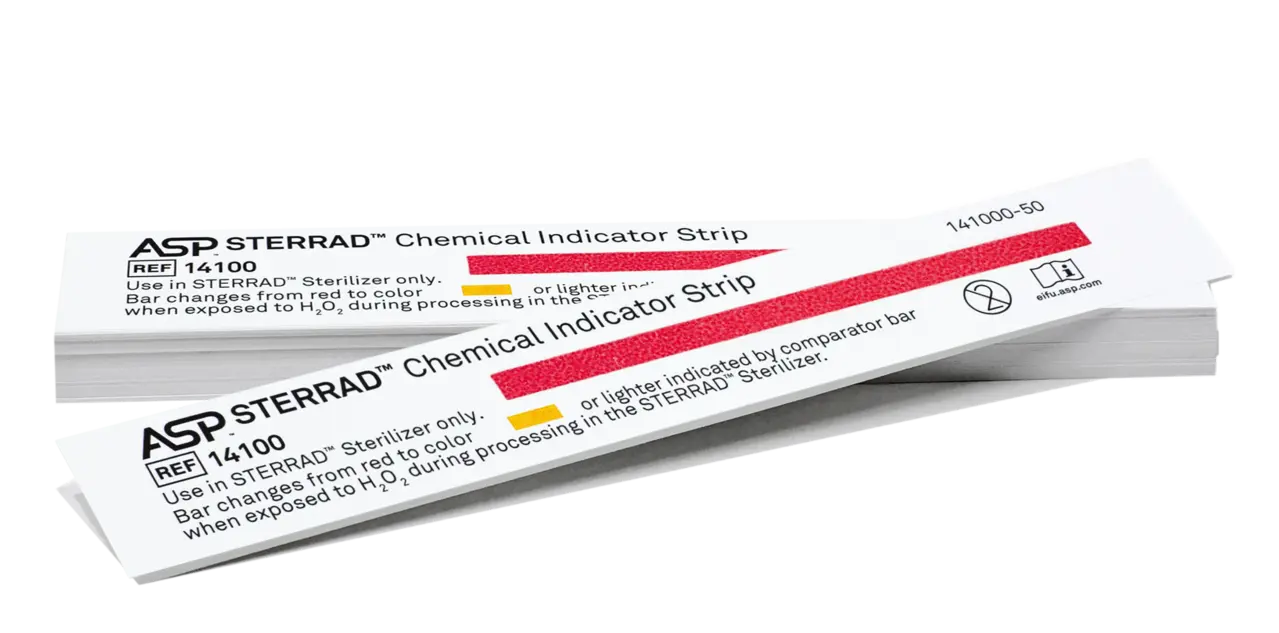
The practical choice is not “use the highest number.” Instead, select an internal CI that is appropriate for the process, the cycle, the package, the risk of the device, and the facility’s written monitoring policy.
Use external and internal indicators for different purposes
External process indicators, commonly tape or printed markings, should be visible on the outside of each package or container as required by the packaging system and local procedure. Their purpose is to distinguish processed from unprocessed items. They help prevent a basic but serious workflow error: issuing an item that was never put through the sterilizer.
They cannot demonstrate adequate conditions inside a wrapped tray, rigid container, pouch, or dense set. A package can have changed external tape while an internal indicator is nonresponsive because sterilant penetration was inadequate at the difficult location.
Place an internal CI inside each package, tray, or container system according to the packaging system IFU and facility procedure. The indicator should be positioned where sterilant penetration is most difficult to achieve, not where it is easiest to see after opening. Common challenging locations may include the center of a large tray, a dense instrument set, or a location shielded by layers of wrapping. The exact location depends on the package design and validated instructions.
Do not tape an internal indicator to the top of a tray simply for convenience if that is not the challenge location. Also avoid placing it where it can be damaged, become unreadable, or interfere with device function.
Use test packs and BIs to challenge the process
A process challenge device presents a defined resistance to sterilant penetration. It is used to assess whether the sterilization process can achieve the required conditions in a deliberately challenging configuration.
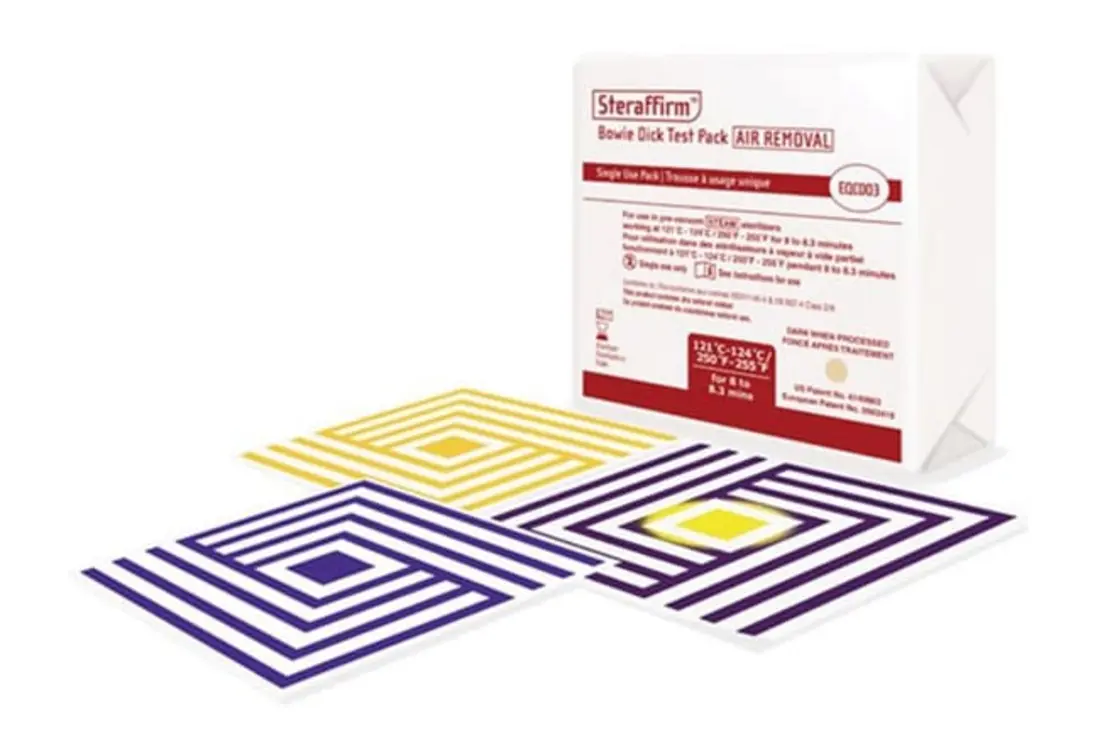
For dynamic-air-removal steam sterilizers, a Bowie-Dick test is a Type 2 chemical indicator test designed to assess air removal and steam penetration performance. It should be run and interpreted according to the sterilizer IFU, test-pack IFU, and facility policy. A failed Bowie-Dick test is not a routine package-level CI failure; it requires prompt assessment because retained air can prevent effective steam penetration.
A BI contains resistant bacterial spores selected for the sterilization modality. Unlike a CI, a BI directly assesses microbial lethality under the test conditions. BI incubation must include the required control BI and follow the manufacturer’s instructions. A negative processed BI with an appropriate positive control supports a valid result; a control that does not perform as expected invalidates the test.
BI frequency, implant-load requirements, quarantine practices, and requalification expectations vary with jurisdiction, current standards, accreditation requirements, the sterilizer modality, and facility policy. These requirements should be written clearly enough that staff do not have to make ad hoc release decisions.
Why an internal CI can fail when the cycle record looks normal
A sterilizer record shows what the equipment measured or controlled in the chamber. An internal CI reports what it experienced at its own location. Those are related measurements, but they are not identical.
When a cycle record appears acceptable and a CI is nonresponsive or inconclusive, investigate both the package and the process. Likely causes include the following.
Load configuration and air removal
In steam sterilization, retained air can block steam contact. Potential contributors include overloaded carts, compressed textile packs, nested basins, improperly oriented containers, trays placed too closely together, or items that obstruct drainage and circulation. A dense set may also create a local barrier even when the chamber as a whole performs normally.
Review photographs, load diagrams, or staff recollection of the load. Compare the arrangement with the sterilizer, container, packaging, and device IFUs. If the same failure location recurs across loads, look for a pattern tied to a shelf position, cart, tray type, or loading practice.
Packaging and tray assembly
Incorrect wrap technique, an incompatible pouch size, excessive tray weight, blocked container filters or valves, poor placement of absorbent materials, and improperly arranged devices can all affect penetration or drying. Packaging must maintain a microbial barrier after processing while allowing the specified sterilant to enter and leave the package.
Check whether the failed set was unusually dense, heavy, wet, or configured differently from comparable sets. Inspect containers, filters, valves, gaskets, and wraps for damage or incorrect assembly.
Wet packs and inadequate drying
A wet pack is not just a cosmetic issue. Moisture can compromise package integrity and can indicate a loading, steam-quality, drainage, or equipment problem. Do not release wet packages as sterile. Investigate whether the cause was excess condensate, inappropriate cool-down handling, overloaded shelves, incorrect packaging, or a sterilizer fault.
Indicator handling and interpretation
Indicators can also produce misleading results when they are expired, stored outside their stated temperature or humidity limits, exposed to moisture or sunlight, contaminated, damaged, or read incorrectly. Confirm the lot number, expiry date, storage history, endpoint reference, and IFU instructions.
A result that is hard to interpret should be treated as inconclusive, not forced into a pass decision. Retain the CI and its packaging if possible for the investigation.
Process drift or equipment malfunction
Repeated failures, failed test packs, unusual cycle records, wet loads, chamber alarms, or abnormal Bowie-Dick results may indicate equipment or utility problems. Potential issues include vacuum leaks, door-seal problems, inadequate air removal, steam quality concerns, drainage faults, sensor errors, or control-system malfunction.
Do not try to correct a suspected sterilizer problem by informally extending exposure time or increasing temperature. Those changes may conflict with the validated cycle and can damage devices or packaging. Escalate through the facility’s established maintenance and quality process.
A structured response to a failed indicator
The immediate response should protect patients while preserving evidence for a useful investigation.
- Stop release of the affected package or load. Segregate the failed package and identify all associated items using the load-control system.
- Notify the designated supervisor or responsible quality authority. Follow the facility’s escalation and recall procedure. A positive BI, failed PCD, failed air-removal test, or abnormal physical monitor can require broader action than a single package-level CI failure.
- Document the facts before rebuilding the load. Record sterilizer identification, cycle type, date and time, load number, operator, device sets, packaging, shelf positions, indicator type and lot, CI result, physical-monitor record, BI or PCD results, and any alarms or unusual observations.
- Review all three monitoring layers. Compare the physical record, external and internal CIs, PCD results, and BI results. Do not treat a normal printout as a reason to disregard a failed internal CI.
- Examine the affected package and load configuration. Look for packaging defects, tray assembly errors, excessive density, blocked surfaces, wetness, and departures from IFUs.
- Identify the scope from the evidence. One failed internal CI may point to a problem limited to that package, but it cannot be dismissed. Repeated failures in one location or across multiple packages suggest a wider issue. The responsible qualified person should determine whether the entire load requires recall based on all available evidence and facility policy.
- Correct the verified cause and reprocess affected items. Reprocess only after cleaning and inspection requirements are met. If equipment performance is in question, remove it from service as required and complete the necessary service and requalification steps before routine use resumes.
- Trend the event. Track failures by sterilizer, cycle, shelf location, tray type, package system, operator, and indicator lot. Trend data can reveal a recurring loading issue or early process drift before a major failure occurs.
Build a monitoring plan that staff can use consistently
A practical plan should specify the indicator used for each process and load category, its placement, who reads it, what constitutes an acceptable result, and what happens when it fails. Include clear visual endpoint examples from the indicator manufacturer where staff need them.
The plan should also connect sterile processing and point-of-use staff. The person opening a package needs to know how to check the external indicator, inspect package integrity, and interpret the internal CI before using the devices. A pass result supports release only when the package is intact and the other required monitoring evidence is acceptable.
Sterilization indicator selection and failure investigation work best when teams stop asking only whether the chamber ran. The more useful question is whether the required sterilant conditions reached the most challenging point in the actual device package, for the required cycle, with documented evidence to support release.