Materials, Design & Development, Quality & Testing
TPE Chemical Compatibility for Grease-Exposed Seals: Selecting Grades That Resist Swelling and Adhesion Failure
Updated
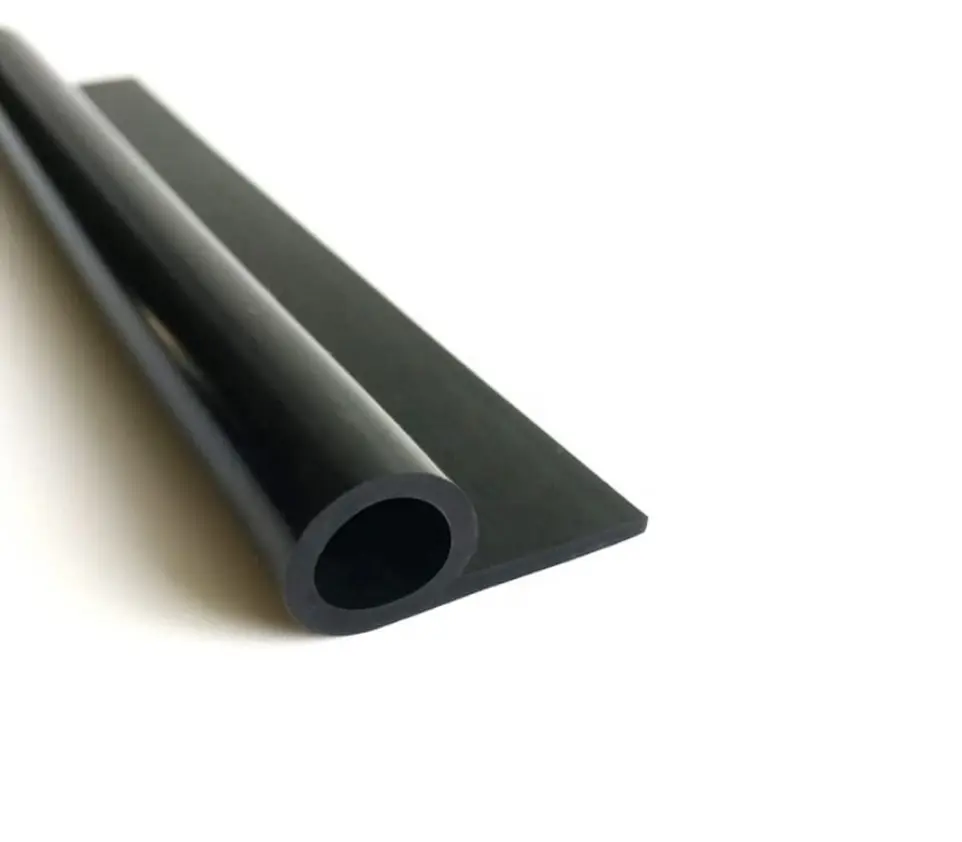
A TPE seal can feel flexible, fit the groove, and pass an initial leak check yet still fail after grease exposure. The failure may appear as swelling, a sticky surface, loss of squeeze, cracking at a stressed edge, or separation from an overmolded housing.
For grease-exposed seals, hardness is only one selection input. The useful question is whether a specific TPE grade can retain its dimensions, mechanical properties, sealing force, and bond performance in the actual grease at the actual service temperature and time.
Start with the grease, not the generic term
“Grease” is not a single chemical environment. It commonly includes a base oil, a thickener, and an additive package. Two greases with similar appearance or nominal application can affect a TPE very differently.
Document the following before asking a supplier for a material recommendation:
- Base-oil chemistry: mineral, synthetic hydrocarbon, silicone, ester, polyalkylene glycol, fluorinated fluid, or another type.
- Thickener chemistry, where relevant.
- Additives, especially extreme-pressure, antiwear, antioxidant, corrosion-inhibitor, and solvent-like components.
- Exposure mode: occasional smear, assembly lubricant, continuous contact, immersion, or grease retained in a sealed cavity.
- Operating and peak temperature, including dwell time at elevated temperature.
- Whether the grease is replenished, aged, oxidized, contaminated, or exposed to cleaning fluids.
- Seal loading, pressure, movement, and expected service life.
A compatibility statement for “lubricating grease” is not enough. Request data against the named grease or, if that is unavailable, a technically justified surrogate based on its base oil and intended operating temperature.
What grease exposure does to a TPE seal
Many grease-related failures begin with absorption of oil or other mobile components into the elastomeric phase of the TPE. The material may gain mass and volume, become softer, and lose tensile, tear, and compression properties. The effect depends on polymer chemistry, formulation, temperature, exposure duration, and part geometry.
Swelling and dimensional change
Swelling can initially appear beneficial because it increases interference. In practice, it can create several problems:
- An O-ring, lip, or gasket may become too large for its gland.
- A constrained seal can generate excessive contact force and friction.
- Swelling can distort thin sections or cause local buckling.
- A swollen seal can be damaged during removal or replacement.
- When grease later dries, migrates, or is replaced, shrink-back may reduce sealing force.
Measure volume change rather than relying on visual inspection. Weight change is also useful, but it does not always predict the final dimensional effect or seal function.
Softening and tackiness
A greasy or tacky surface can indicate absorbed fluid, migration of low-molecular-weight ingredients, or a change in the surface composition. Tackiness matters because it can increase assembly force, retain particulate contamination, and promote sticking in moving components.
A surface that feels tacky after exposure may also have reduced abrasion resistance and tear resistance. Do not treat this as only an appearance issue if the seal contacts a moving mating part or is installed through a tight bore.
Cracking, tearing, and stress-assisted damage
Chemical exposure does not always cause simple softening. A seal under tensile strain, bending, or repeated movement can develop cracks where stress is concentrated: sharp corners, knit lines, gate vestiges, thin lips, notches, and interfaces with rigid inserts.
Grease can also change friction at the mating surface. Lower friction may help a dynamic seal, but it can alter the load distribution and allow extrusion or rolling. Higher friction from tackiness can increase wear and local strain. Test the finished geometry, not only a molded plaque.
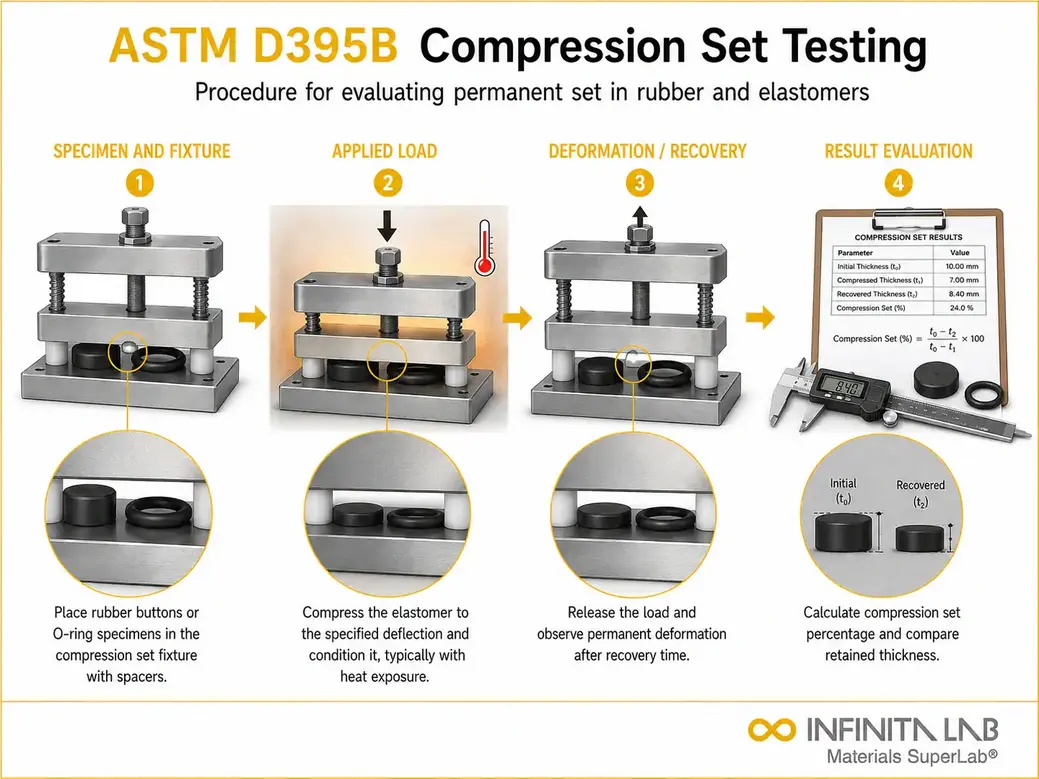
Compression set and stress relaxation
Static seals work because the elastomer maintains a contact force against the mating surfaces. Compression set describes permanent loss of shape after compression. Stress relaxation describes loss of sealing force while the part remains compressed.
Both can worsen with time, temperature, and fluid exposure. A TPE may show acceptable initial compression properties in air but lose useful sealing force after hot grease exposure. This is particularly important for low-load flat gaskets, radial seals with limited squeeze, and seals that cannot tolerate frequent retightening.
Compare TPE families as starting points, not final answers
TPE is a broad category. A family label helps narrow options, but grade formulation determines the final performance. Oil content, plasticizers, fillers, stabilizers, hardness modifiers, and adhesion additives can substantially change chemical resistance and sealing behavior.
| TPE family or type | Grease-exposure considerations for seals | Typical selection caution |
|---|---|---|
| Styrenic block copolymer TPEs, including SEBS-based compounds | Often useful for soft parts and overmolding. Resistance varies widely with oil extension and compound design. | Soft, oil-extended grades may be more vulnerable to swelling, softening, or surface changes in hydrocarbon-rich greases. |
| TPV | Often offers a useful balance of heat resistance, weatherability, and elastic recovery for many industrial seal applications. | Confirm behavior in the specific grease and at elevated temperature; not every TPV is suitable for every lubricant chemistry. |
| TPU | Can provide strong tear and abrasion performance and is used where mechanical durability matters. | Polyether and polyester TPU chemistries differ. Verify hydrolysis, lubricant, and temperature performance for the chosen grade. |
| Copolyester TPE | Can offer higher mechanical strength and temperature capability than softer general-purpose TPEs. | Higher stiffness may make low-contact-pressure sealing more difficult; confirm compression behavior. |
| TPO and polyolefin-based compounds | May suit some low-cost, low-stress applications and can work well with compatible polyolefin substrates. | Often need careful review for long-term compression performance and grease compatibility. |
For demanding grease resistance, a thermoplastic elastomer may not be the appropriate material family. Thermoset materials such as NBR, HNBR, FKM, fluorosilicone, or other specialty elastomers are often considered for specific fluid and temperature combinations. That does not make TPE unsuitable; it means the selection should begin with the service environment rather than an assumption that every flexible material is interchangeable.
Translate seal requirements into material requirements
A material datasheet usually lists hardness, tensile strength, elongation, and perhaps compression set. Those properties are useful, but they do not fully describe a seal under grease exposure.
Build a requirement list that links function to measurable material behavior.
For a static gasket
Prioritize:
- Volume and thickness change after grease exposure.
- Compression set and stress relaxation in the relevant temperature range.
- Compression-deflection behavior needed to achieve the available clamp load.
- Creep under sustained joint load.
- Tear resistance around holes, corners, and thin webs.
- Dimensional stability after molding and after conditioning.
A very soft grade may seal low-pressure surface irregularities well at first, but it can creep or relax more under sustained compression. Increasing hardness can improve creep resistance in a given family, but it may require greater clamp force and may reduce conformity to the mating surfaces.
For a radial or lip seal
Also evaluate:
- Friction and wear against the mating shaft or bore.
- Extrusion resistance at the maximum pressure and gap.
- Tear resistance at the lip root.
- Dynamic compression heating.
- Changes in friction and lip geometry after grease absorption.
A material that resists volume change but has insufficient tear strength or poor heat resistance may still fail at the lip.
For an overmolded or co-molded seal
Add bond retention to the requirement list. The original bond strength is not the only concern. Grease can reach an interface through an exposed edge, mold knit line, void, or imperfectly sealed joint and then weaken the assembly.
Adhesion is a material-system decision
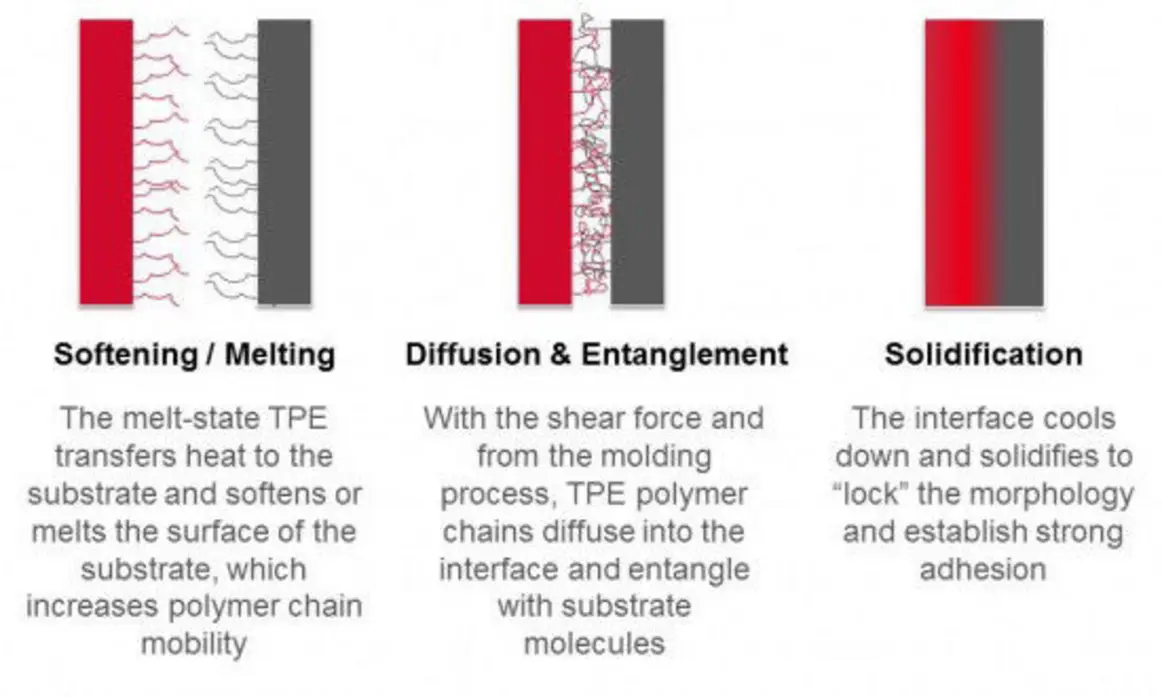
TPE adhesion to a rigid substrate is not guaranteed by calling the material an “overmolding grade.” Chemical compatibility between the TPE and substrate, surface condition, mold temperature, melt temperature, injection conditions, and part design all affect the bond.
A TPE formulated to adhere to polypropylene may not bond adequately to polycarbonate, nylon, ABS, or a urethane-based substrate. Adhesion-modified grades are commonly designed for particular substrate families. Specify the exact substrate grade, including any glass reinforcement, colorants, mold-release agents, coatings, or recycled content.
Grease makes interface design more important. Avoid exposing a simple butt joint directly to a grease reservoir when possible. Use geometry that reduces peel loading and provides mechanical retention, such as undercuts, capture features, grooves, or a sealed overlap. Mechanical retention should not be used to excuse an incompatible material pair, but it can reduce dependence on interfacial adhesion alone.
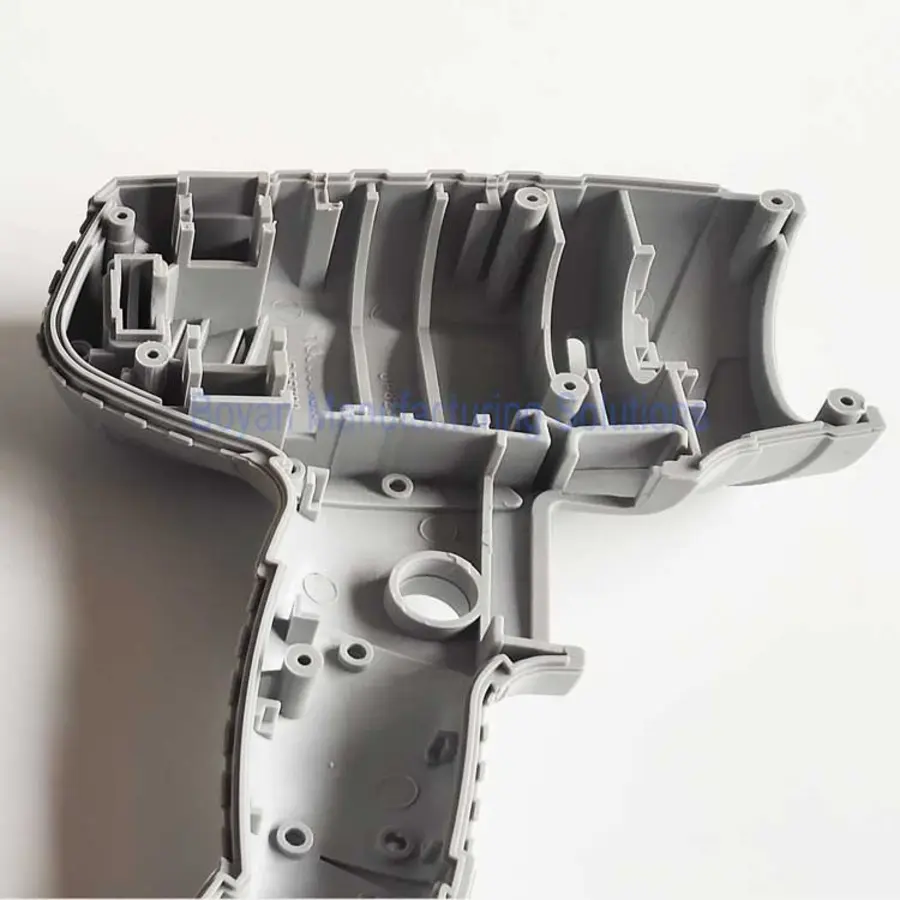
Test bond performance after fluid exposure and thermal aging. Record both the measured force and the failure mode. Cohesive tearing within the TPE generally indicates that the interface remained stronger than the elastomer, while clean separation at the substrate indicates adhesive failure.
Account for molding shrinkage, post-mold change, and assembly fit
TPE seals do not leave the mold at their final dimensions. Cooling shrinkage, molded-in orientation, post-mold relaxation, and storage conditions can affect fit. Grease absorption can then add another dimensional change during service.
For a tight-tolerance seal, evaluate dimensions at three stages:
- After molding and a defined conditioning period.
- After assembly, including any strain introduced by installation.
- After exposure to the specified grease at service temperature.
This sequence identifies problems that a room-temperature molded-part measurement will miss. It is especially valuable for thin gaskets, seals located in rigid plastic housings, and components with asymmetric wall thickness that can warp during cooling.
Use a focused qualification plan
Supplier compatibility charts are useful screening tools, but they are not substitutes for application testing. Ratings are often based on controlled laboratory exposures and may not represent the combined effects of pressure, strain, thermal cycling, grease aging, and device geometry.
A practical qualification plan can include the following:
- Screen candidate grades. Review grade-specific data for the actual grease, temperature range, hardness, compression performance, and intended process.
- Expose molded specimens. Use representative plaques, test bars, and, where possible, molded seal geometry. Include the maximum operating temperature and a realistic exposure duration.
- Measure changes. Record mass, volume, hardness, tensile or tear properties where relevant, and surface condition before and after exposure.
- Test sealing function. Measure leakage, retention force, friction, or pressure performance on assembled parts rather than inferring success from coupon data.
- Assess compression retention. Evaluate compression set or stress relaxation after exposure under the same approximate strain used in the product.
- Evaluate bonded assemblies. Test peel, pull, or other appropriate bond loading before and after conditioning. Inspect the failure mode.
- Include aged grease if applicable. Thermal oxidation, contamination, and additive depletion can change the exposure environment over product life.
- Define acceptance criteria before testing. Agree on allowable dimensional change, force loss, leakage, bond failure mode, and visual condition before comparing grades.
For medical devices, the material selection also needs to fit the device’s biological evaluation, extractables and leachables strategy where applicable, cleaning or sterilization requirements, and regional regulatory documentation. A general statement that a TPE is “medical grade” does not establish suitability for a particular patient-contacting, fluid-contacting, or grease-exposed use.
Questions to send to the TPE supplier
A clear request produces better candidate recommendations. Include these questions:
- Has this exact grade been evaluated in the named grease or a chemically similar fluid?
- What were the exposure temperature, duration, specimen geometry, and measured changes?
- Is the grade oil-extended, plasticized, or modified for adhesion?
- What compression set and stress-relaxation data are available at the required temperature?
- What substrate grades is the material designed to bond to?
- Are there recommended molding conditions for bond development?
- What post-mold conditioning is needed before final dimensional inspection?
- Are there known restrictions involving lubricants, cleaners, sterilization methods, or regulatory ingredients?
Make the final choice on retained function
For grease-exposed seals, the lowest-cost grade with the preferred Shore hardness is rarely enough information for a reliable selection. Choose the grade that maintains the functions the seal must perform: controlled dimensions, usable sealing force, acceptable friction and tear resistance, and stable adhesion where the part is bonded to a substrate.
The most useful evidence is grade-specific exposure data followed by testing of the molded, assembled seal under realistic grease, temperature, compression, and motion conditions. That approach identifies swelling, tackiness, cracking, creep, and bond loss while design changes are still practical.